 National Parks of China
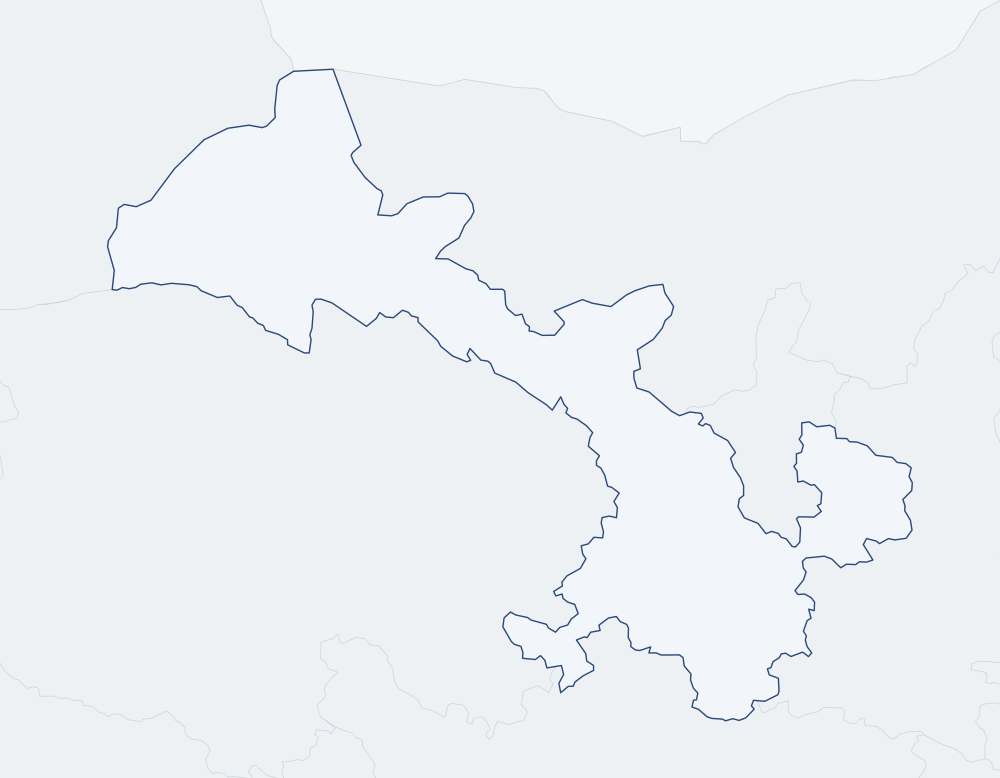
151 Major Historical and Cultural Sites Protected at the National Level in Gansu (batches 1–8, named by the State Council 1961–2019; 1 of them cross provincial borders, such as the Great Wall and the Grand Canal). Dots are coloured by category; click one to jump to its entry. See also Gansu and all provinces.
Batch:

Qingyang (22)
- Beishiku Temple 北石窟寺Cave temples and stone carvings · third batch (1988)Grotto temple at Qingyang in eastern Gansu, cut from the Northern Wei to the Song, an important group of caves in eastern Gansu.
- Nanzuo Site 南佐遗址Ancient sites · fifth batch (2001)A Neolithic site discovered in 1964.
- Ningshou Temple Pagoda 凝寿寺塔Ancient buildings · fifth batch (2001)A multi-story brick pagoda of the Five Dynasties to Song, square with five stories and 21.2 m high, the only surviving building of Ningshou Temple.
- Donghuachi Pagoda 东华池塔Ancient buildings · fifth batch (2001)A Northern Song octagonal seven-story multi-story brick pagoda, repaired in the Ming, 26 m high overall.
- Xiangle Brick Pagoda 湘乐砖塔Ancient buildings · sixth batch (2006)A Song-dynasty hexagonal seven-story pavilion-style brick pagoda with a tall first story and a door on the south side; the stories above the seventh are lost.
- Luochuan Zhao Family Stone Archways 罗川赵氏石坊Ancient buildings · sixth batch (2006)A group of three stone archways, the Qingguan, Tianguan and Enchong archways, all built in the Ming Wanli reign and connected with the official Zhao Bangqing.
- Qin Straight Road Site, Qingyang Section 秦直道遗址庆阳段Ancient sites · seventh batch (2013)The section of the Qin-dynasty Straight Road within Qingyang, passing through Zhengning, Ningxian, Heshui, Huachi and other counties.
- Taerzhuang Pagoda 塔儿庄塔Ancient buildings · seventh batch (2013)A pagoda of the Five Dynasties period, in Ning County.
- Baima Image Pagoda 白马造像塔Ancient buildings · seventh batch (2013)A Song dynasty pagoda carved with images, in Huachi County.
- Jiaozhachuan Ten Thousand Buddha Pagoda 脚扎川万佛塔Ancient buildings · seventh batch (2013)A Song dynasty Ten Thousand Buddha Pagoda in Huachi County.
- Huanxian Pagoda 环县塔Ancient buildings · seventh batch (2013)A Song dynasty pagoda in Huan County.
- Xiaojin Pagoda 肖金塔Ancient buildings · seventh batch (2013)A Song dynasty pagoda in Xifeng District.
- Taerwan Image Pagoda 塔儿湾造像塔Ancient buildings · seventh batch (2013)A Song dynasty pagoda carved with images, in Heshui County.
- Shuangta Temple Image Pagoda 双塔寺造像塔Ancient buildings · seventh batch (2013)A Song dynasty pagoda carved with images, in Huachi County.
- Zhoujiubang Wooden Archway 周旧邦木坊Ancient buildings · seventh batch (2013)A Ming dynasty wooden memorial archway in Qingcheng County.
- Xinglong Mountain Historic Building Complex 兴隆山古建筑群Ancient buildings · seventh batch (2013)A historic building complex of the Ming and Qing periods, in Huan County.
- Shikong Temple Grottoes 石空寺石窟Cave temples and stone carvings · seventh batch (2013)Grotto temple of the Song to Ming period, in Zhenyuan County.
- Site of the Nanliang Revolutionary Government of the Shaanxi-Gansu Border Region 南梁陕甘边区革命政府旧址Modern historic sites · seventh batch (2013)In November 1934 the Shaanxi-Gansu Border Region Soviet Government was founded at Liyuanbao in Nanliang, with Xi Zhongxun as chairman and Liu Zhidan as chairman of the Military Commission.
- Shijia and Yucun Site 石家及遇村遗址Ancient sites · eighth batch (2019)A Zhou-dynasty site in Ning County.
- Dacheng Hall of the Confucian Temple in Zhengning 正宁文庙大成殿Ancient buildings · eighth batch (2019)The main hall of a Ming-dynasty Confucian temple, in Zhengning County.
- Site of the Shanchengbao Campaign 山城堡战役旧址Modern historic sites · eighth batch (2019)Site of the Shanchengbao Campaign of 1936, in Shancheng Township, Huan County.
- Former Shaan-Gan-Ning Provincial Soviet Government at Helianwan 河连湾陕甘宁省苏维埃政府旧址Modern historic sites · eighth batch (2019)Former site of the Shaan-Gan-Ning Provincial Soviet Government, 1936-1937, at Helianwan in Huan County.
Jiuquan (20)
- Mogao Caves (including the Western Thousand-Buddha Caves) 莫高窟(包括西千佛洞)Cave temples and stone carvings · first batch (1961)Buddhist cave complex on the cliff at the eastern foot of Mingsha Mountain, begun under the Former Qin of the Sixteen Kingdoms and expanded in later dynasties; hundreds of caves survive, famed for murals and painted sculptures, and the Library Cave yielded large numbers of ancient manuscripts.
- Yulin Caves 榆林窟Cave temples and stone carvings · first batch (1961)Cave complex cut into cliffs on both sides of the Yulin River gorge, also called Wanfo Gorge, with over forty caves surviving; together with the Mogao Caves it is known as a sister site and is an important part of the Dunhuang grottoes.
- Yumenguan Pass and Great Wall Beacon Tower Sites (including Dafangpan and Xiaofangpan) 玉门关及长城烽燧遗址(包括大方盘、小方盘)Ancient sites · third batch (1988)Site of the Han-dynasty Yumen Pass, commonly called Xiaofangpan City, an important pass on the Silk Road to the Western Regions, paired with Yangguan as the "Two Passes," together with surrounding Great Wall beacon tower remains.
- Suoyang City Site 锁阳城遗址Ancient sites · fourth batch (1996)Ancient city site of the Sui and Tang at the west end of the Hexi Corridor, with remains of the ancient city, river courses, temples and tombs; the name comes from the suoyang herb found abundantly in the area.
- Xuanquanzhi Site 悬泉置遗址Ancient sites · fifth batch (2001)A large Han, Wei and Jin dynasty courier station on the Silk Road, fully named "Xuanquanzhi of Xiaogu County, Dunhuang Commandery", able to host several hundred people at a time.
- Guoyuan–Xincheng Tombs 果园—新城墓群Ancient tombs · fifth batch (2001)Tombs from the Cao Wei, Western Jin and Sixteen Kingdoms to the Tang, spread across Suzhou District of Jiuquan and Jiayuguan; on the tentative list for World Heritage nomination.
- Xihetan Site 西河滩遗址Ancient sites · sixth batch (2006)A Neolithic to Bronze Age site in the urban area of Jiuquan.
- Huoshaogou Site 火烧沟遗址Ancient sites · sixth batch (2006)A Bronze Age site in Yumen.
- Pochengzi Site 破城子遗址Ancient sites · sixth batch (2006)A site of the Han to the Tang, in Guazhou County.
- Ganggangwa Site 缸缸洼遗址Ancient sites · seventh batch (2013)Bronze Age site in Jinta County.
- Huoshiliang Site 火石梁遗址Ancient sites · seventh batch (2013)Bronze Age site in Jinta County.
- Shaguoliang Site 砂锅梁遗址Ancient sites · seventh batch (2013)Site from the Neolithic to the Bronze Age, in Yumen.
- Liugongcheng Site 六工城遗址Ancient sites · seventh batch (2013)City site of the Han to Tang dynasties, in Guazhou County.
- Tashi Tombs 踏实墓群Ancient tombs · seventh batch (2013)Tomb group of the Eastern Han to Tang dynasties, in Guazhou County.
- Jiuquan Drum Tower 酒泉鼓楼Ancient buildings · seventh batch (2013)The east gate tower of the city wall, begun in the Former Liang of the Sixteen Kingdoms, at the city center in the Ming; burned in the Qing and rebuilt in the Guangxu reign, in two parts, a platform and a wooden tower.
- Daheigou Rock Art 大黑沟岩画Cave temples and stone carvings · seventh batch (2013)Rock art of the Warring States to the Han in Subei County; the exact date remains to be determined.
- Wugemiao Grottoes 五个庙石窟Cave temples and stone carvings · seventh batch (2013)Cave temples from the Northern and Southern Dynasties to the Five Dynasties, in Subei County.
- Yumen Oilfield Old Well No. 1 玉门油田老一井Modern historic sites · seventh batch (2013)The first oil well of the Yumen Laojunmiao Oilfield, which began producing in 1939 and is regarded as the starting point of China's modern petroleum industry.
- Mazongshan Jade Mine Site 马鬃山玉矿遗址Ancient sites · eighth batch (2019)A jade mine site from the Warring States to the Han dynasty, around Mazongshan in Subei County.
- Changma Grottoes 昌马石窟Cave temples and stone carvings · eighth batch (2019)Grottoes from the Northern Wei to the Qing, in Yumen.
Tianshui (18)
- Maijishan Grottoes 麦积山石窟Cave temples and stone carvings · first batch (1961)Buddhist cave complex on Maiji Mountain, first cut in the Northern Dynasties, famed for its clay sculptures and caves on the cliff face and one of China's well-known grottoes.
- Dadiwan Site 大地湾遗址Ancient sites · third batch (1988)Neolithic site in the Yellow River basin about 7,800 to 4,800 years old, in five phases including cultural types such as the Laoguantai culture; an important prehistoric settlement.
- Xingguo Temple 兴国寺Ancient buildings · fourth batch (1996)Yuan-dynasty Buddhist temple with the mountain gate, Heavenly Kings Hall and Banruo Hall surviving; the Banruo Hall has a single-eave hip-gable roof, and a wooden plaque inscribed "built in the Zhishun years of the Yuan" was found in its wall.
- Fuxi Temple 伏羲庙Ancient buildings · fifth batch (2001)A temple in Tianshui worshipping Fuxi, first built in the Yuan and enlarged in the Ming and Qing, with an archway, gate, ceremonial gate, Xiantian Hall and Taiji Hall on its central axis.
- Hu Family Ancient Residences 胡氏古民居建筑Ancient buildings · fifth batch (2001)A group of Ming and Qing residences in two parts, the South House and North House facing each other across a street, first built in the Jiajing reign of the Ming; the South House is now a folk museum.
- Shuilian Cave-Daxiangshan Grottoes 水帘洞—大像山石窟Cave temples and stone carvings · fifth batch (2001)A group of grottoes from the Northern Dynasties to the Tang, including Shuilian Cave and Lashaosi in Wushan and Daxiangshan in Gangu; the cliff at Lashaosi has a large Northern Zhou stone-core clay sculpture of one Buddha and two bodhisattvas.
- Yuquan Temple 玉泉观Ancient buildings · sixth batch (2006)A Daoist temple begun in the Tang, with over ninety surviving Ming and Qing buildings; the Jade Emperor Hall is a fairly intact Ming building, and the temple holds steles including the Yuan four-sided Daoist stele.
- Houjie Mosque 后街清真寺Ancient buildings · sixth batch (2006)A mosque of the Ming to Qing periods.
- Qin'an Confucian Temple 秦安文庙Ancient buildings · sixth batch (2006)A Confucian temple founded before the Yuan, covering about 3,200 square meters; the Dacheng Hall is a Ming building.
- Mutisi Grottoes 木梯寺石窟Cave temples and stone carvings · sixth batch (2006)According to a survey report, the grottoes were founded around the Tang-Song transition and still built in the Yuan, with cave and statue making reaching its peak from the Ming and Qing to the Republic.
- Langjiaowa Site 狼叫屲遗址Ancient sites · seventh batch (2013)Site from the Paleolithic to the Neolithic, in Wushan County.
- Liya Site 李崖遗址Ancient sites · seventh batch (2013)A site from the Neolithic to the Zhou dynasty, in Qingshui County.
- Majiayuan Site 马家塬遗址Ancient sites · seventh batch (2013)A cemetery of Western Rong nobles from the late Warring States to the Qin period; 80 tombs and 68 ceremonial vehicles have been excavated, many with gold, silver and bronze fittings.
- Fangmatan Tombs 放马滩墓群Ancient tombs · seventh batch (2013)Cemetery of the Warring States to Western Han; 13 Qin tombs and 1 Western Han tomb have been found, yielding wooden-board maps, bamboo slips and paper maps.
- Maojiaping Site 毛家坪遗址Ancient sites · eighth batch (2019)A site from the Neolithic to the Zhou dynasty, covering more than 600,000 square meters.
- Shengshou Temple in Wushan 武山圣寿寺Ancient buildings · eighth batch (2019)A Buddhist temple of the Yuan to Republican period, in Wushan County.
- Tianshui Ji Xin Shrine 天水纪信祠Ancient buildings · eighth batch (2019)A shrine complex first built in the Yuan, at first the Chengji county yamen and converted to a City God temple in the early Ming; it has three gates, four rows and twenty-one halls, and honors Ji Xin.
- Heyu Cliff Inscriptions 河峪摩崖石刻Cave temples and stone carvings · eighth batch (2019)Eastern Han cliff inscriptions in Zhangjiachuan County.
Zhangye (18)
- Luotuocheng Site 骆驼城遗址Ancient sites · fourth batch (1996)Site of a frontier commandery city of the Han and Tang in the middle of the Hexi Corridor, first built under Emperor Wu of Han; the surviving city was rebuilt in the late Han and is commonly called Luotuo City.
- Zhangye Giant Buddha Temple 张掖大佛寺Ancient buildings · fourth batch (1996)Buddhist temple first built in the Western Xia and named for its huge reclining Buddha; the Great Buddha Hall, Sutra Library and Earthen Pagoda survive, and the Great Buddha Hall is nine bays wide.
- Mati Temple Grottoes 马蹄寺石窟群Cave temples and stone carvings · fourth batch (1996)Cave group of the Sixteen Kingdoms to the Qing, including seven cave clusters such as Mati North Temple, South Temple, Thousand Buddha Caves, Jinta Temple and Guanyin Cave, some of them damaged.
- Heishuiguo Site 黑水国遗址Ancient sites · fifth batch (2001)A site from the Han to the Wei and Jin, including the south city and north city of Heishuiguo, an ancient temple and Han and Jin tombs, spread over about 16 square kilometers; the surviving city walls were built in the Ming.
- Xusanwan City and Tombs 许三湾城及墓群Ancient sites · fifth batch (2001)An ancient city and tombs from the Han to the Tang in the Hexi Corridor; from the bronze seals and other relics unearthed, it was once a military stronghold.
- Yuantong Temple Pagoda 圆通寺塔Ancient buildings · fifth batch (2001)A Tibetan-style Buddhist pagoda first built in the Northern Song and repaired many times, 23.37 m high overall, with eight small pagodas on the pagoda base.
- Wenshushan Grottoes 文殊山石窟Cave temples and stone carvings · fifth batch (2001)Early Buddhist remains within the Liangzhou-type grotto range, divided into front and rear hills, with 131 grottoes of types including central-pillar caves, meditation caves and monks' cells.
- Bagua Camp City Site 八卦营城址Ancient sites · sixth batch (2006)A city site and tombs of the Han to the Jin, in Minle County.
- Zhangye Drum Tower 张掖鼓楼Ancient buildings · sixth batch (2006)A drum tower begun in the Ming, also called Jingyuan Tower, 28 meters high, in a terrace and a pavilion part; a Tang bronze bell hangs on the terrace.
- Xilai Temple 西来寺Ancient buildings · sixth batch (2006)A Han Chinese Chan Buddhist temple begun in the Tang and rebuilt in the Ming, originally called Ciyun Cloister; its Vajra Hall is the only Ming building in Zhangye.
- Zhangye Guild Hall 张掖会馆Ancient buildings · sixth batch (2006)A guild hall built in Zhangye by Shanxi merchants in the Qing dynasty, next to the Giant Buddha Temple, with a mountain gate, opera stage, viewing pavilions and an archway.
- Donghuishan Site 东灰山遗址Ancient sites · seventh batch (2013)Bronze Age site in Minle County.
- Caogoujing City Site 草沟井城址Ancient sites · seventh batch (2013)City site and tombs of the Han to Ming dynasties, in Sunan Yugur Autonomous County.
- Jiazidun Tombs 甲子墩墓群Ancient tombs · seventh batch (2013)Tomb group of the Han dynasty to the Wei and Jin, in Ganzhou District, Zhangye.
- Xihuishan Site 西灰山遗址Ancient sites · eighth batch (2019)A Bronze Age site of the Xia and Shang periods, in Minle County.
- Zhangye East Granary 张掖东仓Ancient buildings · eighth batch (2019)An ancient granary first built in the 25th year of Hongwu of the Ming (1392), with nine granaries surviving; one of the best-preserved ancient granaries in Gansu.
- Zhangye General Gao's Residence 张掖高总兵宅院Ancient buildings · eighth batch (2019)Residence of Gao Meng, a native of Zhangye in the early Qing, commonly called the General Gao Mansion; on Minzhu West Street.
- Tongzi Temple Grottoes 童子寺石窟Cave temples and stone carvings · eighth batch (2019)The grottoes are in a south and a north area, with 9 caves surviving, 3 of them central-pillar caves; they were repaired in the Northern Dynasties and the Qing, and have Buddhist and Daoist murals.
Wuwei (12)
- Stele of the Rebuilding of the Ganying Pagoda of Huguo Temple (Western Xia Stele) 重修护国寺感应塔碑(西夏碑)Cave temples and stone carvings · first batch (1961)Commemorative stele carved in the fifth year of the Tianyou Minan reign of the Western Xia (1094), with Tangut script on one side and Chinese on the other; rediscovered in the Jiaqing years of the Qing, it is of great significance for the study of Tangut.
- Wuwei Confucian Temple 武威文庙Ancient buildings · fourth batch (1996)Confucian temple first built in the Zhengtong years of the Ming, facing south, made up of the Wenchang Palace in the east, the core Confucian temple buildings in the middle and buildings in the west; the middle section has a Pan Pond, Lingxing Gate and Dacheng Hall.
- Baitasi Site 白塔寺遗址Ancient sites · fifth batch (2001)A Yuan dynasty Buddhist temple site in Liangzhou District, Wuwei.
- Leitai Han Tomb 雷台汉墓Ancient tombs · fifth batch (2001)A tomb from the end of the Eastern Han to the early Wei and Jin, at Leitai in Wuwei.
- Tiantishan Grottoes 天梯山石窟Cave temples and stone carvings · fifth batch (2001)Grottoes first carved in the Northern Liang, originally called the Liangzhou Grottoes, added to through the dynasties; the caves and murals survive, and some statues were moved to the provincial museum because of a reservoir.
- Rui'an Fort 瑞安堡Modern historic sites · sixth batch (2006)A manor-style fortified compound built in the early Republic by the local gentry member Wang Qingyun, covering over 5,000 sq m, with secret passages and shooting holes.
- Mozuizi and Wubashan Tombs 磨咀子和五坝山墓群Ancient tombs · seventh batch (2013)Han-dynasty tomb groups on both banks of the Zamu River at the foot of the Qilian Mountains; Mozuizi yielded Yili bamboo slips and the 'ten Wang Zhang slips'.
- Hantanpo Tombs 旱滩坡墓群Ancient tombs · seventh batch (2013)Tomb group of the Han to Jin dynasties, in Liangzhou District.
- Tombs of the Prince of Gaochang and the Prince of Xining 高昌王和西宁王墓Ancient tombs · seventh batch (2013)Cemeteries of the Uyghur Gaochang prince family and the Xining prince family of the Yuan dynasty; the Gaochang Prince's Merit Stele and the Xining Prince's Spirit-Way Stele, inscribed in Chinese with Uyghur and Mongolian, originally stood here.
- Haizang Temple 海藏寺Ancient buildings · seventh batch (2013)A Buddhist temple of the Ming to Republican periods, in Liangzhou District, Wuwei.
- Shengrong Temple 圣容寺Ancient buildings · seventh batch (2013)A temple complex of the Ming to Republican period, in Minqin County.
- Tianzhu East Temple 天祝东大寺Ancient buildings · eighth batch (2019)A Qing-dynasty temple building in Tianzhu Tibetan Autonomous County.
Pingliang (12)
- South Grottoes Temple 南石窟寺Cave temples and stone carvings · third batch (1988)A grotto temple from the Northern Wei to the Tang dynasty, in Jingchuan County.
- Wukang Wang Temple 武康王庙Ancient buildings · fifth batch (2001)A temple built to commemorate Li Yuanliang, Prince of Wukang in the Tang, moved to its present site in the Hongwu reign of the Ming; the surviving main hall dates from the Ming and Qing.
- Yan'en Temple Pagoda 延恩寺塔Ancient buildings · sixth batch (2006)A seven-story octagonal pavilion-style brick pagoda begun in the Ming, originally in Yan'en Temple, whose other buildings are gone.
- Yunyasi and Chenjiadong Grottoes 云崖寺和陈家洞石窟Cave temples and stone carvings · sixth batch (2006)Cave temples of the Northern and Southern Dynasties to the Ming, including the Yunya Temple Grottoes and the Chenjiadong Grottoes, in Zhuanglang County.
- Wangmugong Grottoes 王母宫石窟Cave temples and stone carvings · sixth batch (2006)A Northern Wei cave temple in Jingchuan County.
- Niujiaogou Site 牛角沟遗址Ancient sites · seventh batch (2013)Paleolithic site in Jingchuan County.
- Xishan Site 西山遗址Ancient sites · seventh batch (2013)A site from the Neolithic to the Shang dynasty, in Lingtai County.
- Qiaocun Site 桥村遗址Ancient sites · seventh batch (2013)A site from the Neolithic to the Han dynasty, in Lingtai County.
- Chengji Ancient City Site 成纪故城遗址Ancient sites · seventh batch (2013)Ancient city site of the Qin to Song dynasties, in Jingning County.
- Kongtong Mountain Historic Building Complex 崆峒山古建筑群Ancient buildings · seventh batch (2013)A complex of temples and Daoist buildings on Mount Kongtong, from the Song, Ming and Qing periods.
- Shigong Temple Grottoes 石拱寺石窟Cave temples and stone carvings · seventh batch (2013)Cave temples from the Northern Wei to the Sui and Tang, in Huating.
- Jingning Confucian Temple 静宁文庙Ancient buildings · eighth batch (2019)A Confucian temple first built in the 21st year of Jiajing of the Ming (1543), later assigned to Jingning No. 1 Middle School.
Lanzhou (9)
- Site of the Lu Chieftain's Yamen 鲁土司衙门旧址Ancient buildings · fourth batch (1996)Site of the yamen of the Lu family chieftains of the Ming and Qing, first built in the 11th year of the Hongwu reign (1378), with Datong Temple built separately to the west.
- Ming Tombs of the Princes of Su 明肃王墓Ancient tombs · sixth batch (2006)The family tombs of the Ming Princes of Su, built against a hillside, with 11 royal tombs, 5 of them excavated.
- Hongcheng Gan'en Temple 红城感恩寺Ancient buildings · sixth batch (2006)A Tibetan Buddhist temple begun in the 5th year of the Ming Hongzhi reign (1492) and named Gan'en Temple by imperial edict the following year.
- Lanzhou Yellow River Iron Bridge 兰州黄河铁桥Modern historic sites · sixth batch (2006)Also called Zhongshan Bridge, spanning the Yellow River, completed in the 1st year of the Qing Xuantong reign (1909), the first permanent Yellow River bridge in Lanzhou's history, renamed Zhongshan Bridge in 1928.
- Qingcheng Ancient Dwellings 青城古民居Ancient buildings · seventh batch (2013)A group of traditional dwellings in Qingcheng Town, Yuzhong, mostly Qing-dynasty courtyard houses, whose owners were mostly water-pipe tobacco merchants, combining Shanxi courtyard and Beijing siheyuan styles.
- Wuquan Mountain Building Complex 五泉山建筑群Ancient buildings · seventh batch (2013)A complex begun in the Yuan and added to and repaired many times in the Ming, Qing and Republican periods; it now includes historic building groups such as Zhuangyan Temple and Junyuan Temple.
- Lanzhou Prefecture City God Temple 兰州府城隍庙Ancient buildings · seventh batch (2013)A Qing dynasty City God temple in the middle of Zhangye Road, honoring Ji Xin, now converted into a club.
- Jintian Temple 金天观Ancient buildings · seventh batch (2013)A Qing dynasty Daoist temple in Qilihe District, most of whose grounds are now the Lanzhou Workers' Cultural Palace.
- Former Site of the Eighth Route Army Lanzhou Office 八路军兰州办事处旧址Modern historic sites · seventh batch (2013)Former site of the office the Eighth Route Army maintained from 1937 to 1943; there are now two sites, on Jiuquan Road and Gannan Road, about 220 meters apart.
Longnan (8)
- Dabaozishan Site and Tombs 大堡子山遗址及墓群Ancient sites · fifth batch (2001)A site and tombs from the Western Zhou to the Spring and Autumn period, location of the mausoleum area of the Dukes of Qin at Xichui, regarded as the old land of Qin Xichui recorded in histories.
- Xixia Song Cliff Inscription 西狭颂摩崖石刻Cave temples and stone carvings · fifth batch (2001)A cliff inscription of the 4th year of Jianning of the Eastern Han (171), praising the governor Li Xi for building the Xixia plank road, made up of the title, main text and the Five Auspicious Omens picture.
- Site of the Hadapu Meeting 哈达铺会议旧址Modern historic sites · fifth batch (2001)The site of meetings held by the Red Army during the Long March in 1935 to 1936.
- Cliff Inscription "Record of the Newly Built Baishui Road" 《新修白水路记》摩崖Cave temples and stone carvings · sixth batch (2006)A Northern Song cliff inscription of 26 columns and 883 characters in regular script, recording the building and changes of the Baishui Road.
- Shigouping Site 石沟坪遗址Ancient sites · seventh batch (2013)Site from the Neolithic to the Zhou dynasty, in Li County.
- Lichuan Brick Pagoda 栗川砖塔Ancient buildings · seventh batch (2013)The pagoda of Baita Temple built in the Chunhua reign of the Northern Song, also called the Lichuan White Pagoda; it was octagonal with twelve stories when repaired in the Daoguang reign of the Qing.
- Tomb of Wu Ting 吴挺墓Ancient tombs · eighth batch (2019)A Southern Song tomb, in Cheng County.
- Fujin Guangyan Temple 福津广严院Ancient buildings · eighth batch (2019)A temple first built in the Song; the existing structures are of the Southern Song and Qing, in Wudu District.
Linxia Hui Autonomous Prefecture (7)
- Binglingsi Grottoes 炳灵寺石窟Cave temples and stone carvings · first batch (1961)Cave complex cut into the cliffs on the north bank of the Yellow River, beginning in the Western Jin and Western Qin periods, in four tiers; it was called Longxing Temple in the Tang and Binglingsi from the Ming onward.
- Qijiaping Site 齐家坪遗址Ancient sites · fourth batch (1996)Neolithic site where the Qijia culture was first found and from which it takes its name.
- Linjia Site 林家遗址Ancient sites · sixth batch (2006)A Neolithic site.
- Banshan Site 半山遗址Ancient sites · seventh batch (2013)Neolithic site of the Banshan type of the Majiayao culture, which is named after it, famous for Banshan painted pottery with black patterns on a red ground.
- Xinzhuangping Site 新庄坪遗址Ancient sites · seventh batch (2013)Qijia culture site discovered in 1929, covering about 300,000 square meters and dating from the Neolithic to the Bronze Age.
- Bianjialin Site 边家林遗址Ancient sites · seventh batch (2013)Site from the Neolithic to the Shang dynasty, in Kangle County.
- Linxia East Mansion and Butterfly Building 临夏东公馆与蝴蝶楼Modern historic sites · seventh batch (2013)Two residences of Ma Buqing: the East Mansion, begun in 1938 and completed in 1945, and the Butterfly Building, completed around 1943 and shaped like a butterfly in plan.
Gannan Tibetan Autonomous Prefecture (7)
- Labrang Monastery 拉卜楞寺Ancient buildings · second batch (1982)One of the six great monasteries of the Gelug school of Tibetan Buddhism, on the Daxia River, first built in the Qing; a large Tibetan Buddhist monastery in the Gannan area.
- Bajiaocheng City Site 八角城城址Ancient sites · sixth batch (2006)A city site of the Tang to the Ming, 2,193.4 m in perimeter, in the shape of a hollow cross with what look like eight corners, hence the name Bajiaocheng (Octagonal City).
- Site of the Eju Conference 俄界会议旧址Modern historic sites · sixth batch (2006)The site of the enlarged Politburo meeting held during the Red Army's Long March in 1935, in Dala Township, Diebu County.
- Ranao Site 然闹遗址Ancient sites · seventh batch (2013)Site from the Neolithic to the Bronze Age, in Diebu County.
- Mogou Site (including tombs) 磨沟遗址(含墓群)Ancient sites · seventh batch (2013)A Neolithic and Bronze Age settlement on the upper Tao River; excavation in 2008 revealed remains of the Yangshao, Majiayao, Qijia and Siwa cultures and nearly a hundred tombs.
- Taozhou Garrison City 洮州卫城Ancient buildings · seventh batch (2013)A Ming-dynasty garrison city rebuilt on the basis of an earlier city, first named Hehe City, called Honghe City after its Northern Wei rebuilding; about 5,430 m in circumference, it is one of the largest surviving garrison cities.
- Galutian Big House 尕路田大房子Modern historic sites · eighth batch (2019)A modern historical site of 1943, in Lintan County.
Dingxi (7)
- Majiayao Site 马家窑遗址Ancient sites · third batch (1988)Ancient site from the Neolithic to the Bronze Age, at the mouth of Mayu Gully south of Nan Majiayao Village in Lintao County.
- Wang Family Cemetery 汪氏家族墓地Ancient tombs · fifth batch (2001)The cemetery of the Wang family from the Yuan to the Ming, in Zhang County.
- Siwa Site 寺洼遗址Ancient sites · sixth batch (2006)The type site of the Siwa Culture, first found in 1924; excavations since 2018 have revealed a large Majiayao Culture settlement.
- Baling Bridge 灞陵桥Modern historic sites · sixth batch (2006)A timber arch bridge over the Qingyuan River, begun in the Hongwu era of the Ming and rebuilt as an arch bridge in 1919, known for its location at the source of the Wei River.
- Xindian Site 辛店遗址Ancient sites · seventh batch (2013)The type site of the Xindian Culture, which is mainly distributed in the Gansu-Qinghai region and dates to about 1600-600 BC.
- Weiyuan Tower 威远楼Ancient buildings · seventh batch (2013)The bell and drum tower at the center of Longxi County town, three stories with a hip-and-gable roof; one account says it was first built in the Northern Song, rebuilt in the Ming Hongwu reign and enlarged in the Qing Kangxi reign.
- Site of the Bangluo Town Meeting 榜罗镇会议旧址Modern historic sites · seventh batch (2013)Site of a meeting held in 1935 during the Red Army's Long March; located in Bangluo Town, Tongwei County.
Baiyin (4)
- Site of the Red Army Rendezvous at Huining 会宁红军会师旧址Modern historic sites · fourth batch (1996)Site of the 1936 meeting of the three main forces of the Red Army, with the Rendezvous Building, Rendezvous Tower, the site of the Red Army General Headquarters and several command post sites within the protected area.
- Niumendong Site 牛门洞遗址Ancient sites · sixth batch (2006)A Neolithic to Bronze Age site in Huining County.
- Yongtai City Site 永泰城址Ancient sites · sixth batch (2006)A Ming dynasty city site built in the Wanli reign, 1,710 m around, also called Turtle City because its outline resembles a turtle.
- Xiaochuan Porcelain Kiln Site 小川瓷窑遗址Ancient sites · eighth batch (2019)A porcelain kiln site from the Song to the Republic, in Pingchuan District.
Jinchang (4)
- Shengrong Temple Pagoda 圣容寺塔Ancient buildings · fifth batch (2001)A Tang dynasty square brick Buddhist pagoda, the earliest surviving pagoda in Gansu.
- Yongchang Bell and Drum Towers 永昌钟鼓楼Ancient buildings · sixth batch (2006)Bell and drum towers completed in the 15th year of the Ming Wanli reign (1587) in the center of the county town, in a platform and a tower body, repaired several times in the Qing.
- Sanjiaocheng Site 三角城遗址Ancient sites · seventh batch (2013)Site of the Western Zhou to the Spring and Autumn period, in Jinchuan District, Jinchang.
- Yongchang Beihaizi Pagoda 永昌北海子塔Ancient buildings · eighth batch (2019)A pagoda of the Ming and Qing periods, in Yongchang County.
Jiayuguan (2)
- Great Wall at Jiayuguan 万里长城-嘉峪关Ancient buildings · first batch (1961)The first pass at the western end of the Ming Great Wall, at a key crossing on the ancient Silk Road and an important pass on the Hexi Corridor in the Ming.
- Heishan Rock Art 黑山岩画Cave temples and stone carvings · seventh batch (2013)Rock art from the Warring States to the Ming, in Jiayuguan.
Across provinces (1)
- Juyan Site 居延遗址Ancient sites · third batch (1988)Sites of the Han-dynasty Juyan area distributed along the Heihe River, spanning Ejin Banner in Inner Mongolia and Jinta County in Gansu.