 National Parks of China
← World Heritage map · ← Europe
Cultural 16Natural 1
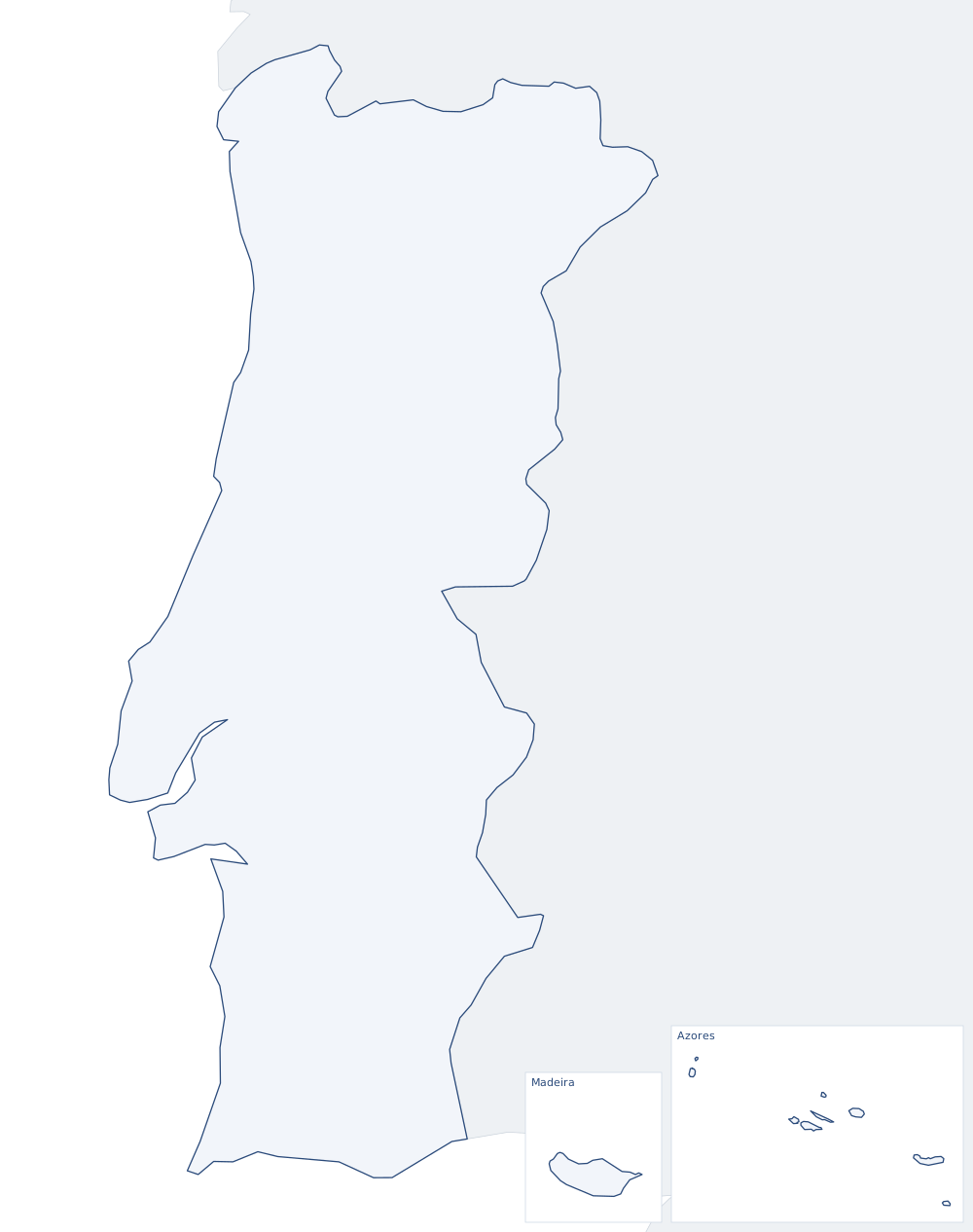
Portugal has 17 World Heritage Sites (16 cultural, 1 natural), the 19th most in the world (tied with Czechia, South Korea). Hover over or tap a dot to see its name; click a name in the list to show it on the map. Listed by year of inscription.
- Central Zone of the Town of Angra do Heroismo in the Azores On Terceira Island in the Azores, Angra was an important port of call on Atlantic sailing routes from the 15th century. Its street plan and buildings reflect the age of navigation, and it was restored after the 1980 earthquake.
- Monastery of the Hieronymites and Tower of Belém in Lisbon In the Belém district of Lisbon, Portugal, two Manueline buildings of the early 16th century. The monastery and the tower at the river mouth are linked with the Age of Discovery and are richly carved.
- Monastery of Batalha In central Portugal, a monastery begun in the late 14th century to commemorate the victory at Aljubarrota and built over about 150 years. It is a masterpiece of Portuguese Gothic, with later Manueline additions.
- Convent of Christ in Tomar In Tomar, central Portugal, a 12th-century Templar castle that became a convent of the Order of Christ. Its architecture runs from Romanesque to Renaissance and includes the well-known Manueline window.
- Historic Centre of Évora In the Alentejo of southern Portugal, the town has a Roman temple, medieval walls and white-washed houses of the 16th century. It was a royal residence and keeps the appearance of the period around the Age of Discovery.
- Monastery of Alcobaça In central Portugal, founded in the 12th century by King Afonso I and among the earliest Gothic buildings in the country. The church and monastery are plainly and regularly planned in the Cistercian tradition.
- Cultural Landscape of Sintra In hills west of Lisbon, Portugal, Sintra became a centre of European Romantic architecture from the 19th century. Pena Palace, Quinta da Regaleira and other buildings and gardens set in the landscape influenced garden design in Europe.
- Historic Centre of Oporto, Luiz I Bridge and Monastery of Serra do Pilar On the Douro river in northern Portugal, the old town rises on the hillside above the water and reflects more than 2,000 years of urban development. The Luiz I Bridge and the Serra do Pilar monastery are landmarks, and the town has churches, palaces and houses.
- Prehistoric Rock Art Sites in the Côa Valley and Siega Verde This property combines two open-air rock-art sites, the Côa Valley in Portugal and Siega Verde in Spain, on the banks of the Côa and Agueda rivers, tributaries of the Douro. The engravings document continuous human occupation from the end of the Upper Palaeolithic.
- Laurisilva of Madeira On Madeira, Portugal, the largest surviving area of primary laurel forest, covering about 20% of the island. It preserves many ancient plant species and a rich range of endemic animals and plants.
- Historic Centre of Guimarães and Couros Zone In northern Portugal, Guimarães is regarded as a birthplace of the Portuguese nation. Its medieval centre and the Couros tanning district preserve buildings from the Middle Ages to the modern era and show the development of traditional building techniques.
- Alto Douro Wine Region In the Douro valley of northern Portugal, wine has been made for about 2,000 years, and the region was one of the first demarcated wine regions in the world. Terraced slopes, estates and villages form a distinctive cultural landscape where port wine is produced.
- Landscape of the Pico Island Vineyard Culture On Pico Island in the Azores, vines are grown in small plots enclosed by walls of black volcanic stone that shelter them. Extensive stone walls, houses and ports form a wine-growing landscape that continues today.
- Garrison Border Town of Elvas and its Fortifications In the Alentejo of eastern Portugal near the Spanish border, Elvas has one of the largest bastioned fortification systems in Europe. Dutch-style defences, forts and an aqueduct reflect military architecture of the 17th to 19th centuries.
- University of Coimbra – Alta and Sofia In central Portugal, the university has taught in Coimbra since the 13th century and is the oldest in the country. Its hilltop campus, library and chapel reflect centuries of university tradition and its influence across the Portuguese-speaking world.
- Royal Building of Mafra – Palace, Basilica, Convent, Cerco Garden and Hunting Park (Tapada) North of Lisbon, Portugal, a complex built in the 18th century under King John V, comprising a palace, basilica, convent, garden and hunting park. Its Baroque and Neoclassical architecture includes a notable library.
- Sanctuary of Bom Jesus do Monte in Braga In Braga, northern Portugal, a Baroque stairway climbs a hillside to a pilgrimage church. The steps, fountains and statues symbolise a spiritual journey, and the site is a leading example of a European Catholic sanctuary.