National Parks of China
Overview
| Designation | National Park of China (first batch) AAAAA tourist attraction |
| Province | Zhejiang |
| Location | Zhoushan Islands near Hangzhou Bay, Zhejiang |
| Latitude, longitude | 30.0, 122.4 Google Maps |
| Highlights | Sacred Buddhist mountain, seat of Guanyin; island |
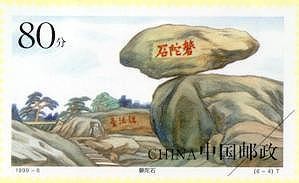
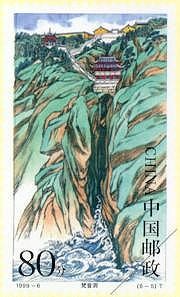
| Top sights | Fanyin Cave, Pantuo Rock |
| Highest point | 286.3 m |
| Nearby cities | Shanghai, Hangzhou, Suzhou |
| Nearby sites | Mount Xuedou, West Lake, Hangzhou, Mount Yandang, Classical Gardens of Suzhou, Shengsi Islands |
| Themes | Mountains, Famous mountains, Sea, Islands, Buddhism, Temples, Stamps, Cable cars |
About
Mount Putuo, in the Zhoushan Islands near Ningbo, Zhejiang, is the seat of the bodhisattva Guanyin and one of the four sacred Buddhist mountains of China, “the Buddhist kingdom of sea and sky”.
Putuoshan is a small island of the Zhoushan archipelago, 8.6 km long and about 12.5 km², facing Zhoushan island across a strait. In the Tang the Japanese monk Egaku, carrying a statue of Guanyin home from Mount Wutai, was stopped here by storms and left the image in a shrine, the “Guanyin who would not leave”; the island has been the seat of Guanyin ever since. At its height it had over 80 temples; the three great monasteries of Puji, Fayu and Huiji and dozens of nunneries survive, their incense never ceasing, and the golden sand, blue sea and old temples make the “Buddhist kingdom of sea and sky”.
Main sights
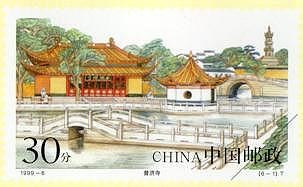
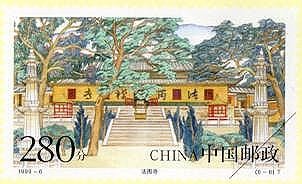
Puji Temple: the “front temple” in the south, the island’s largest, founded in the Song and rebuilt under Kangxi, with the great Yuantong Hall of Guanyin.
Fayu Temple: the “rear temple” in the middle of the island, founded in the Ming; its Nine Dragon Hall was moved from the Ming palace in Nanjing and has a superb nine-dragon caisson ceiling.
Huiji Temple: on the summit of Foding Mountain in the north, the highest point, overlooking the island and the sea.
Guanyin of the South Sea: a 33 m bronze statue at the southern tip of Shuangfeng Mountain, completed in 1997, the island’s emblem.
Chaoyin and Fanyin caves: sea caves where the tide thunders in, legendary places of Guanyin’s appearances.
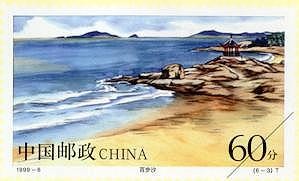
Hundred-Step and Thousand-Step beaches: two sandy beaches on the east coast for bathing and sunrise.
Purple Bamboo Grove and the Guanyin Who Would Not Leave: the site of Egaku’s shrine beside Chaoyin Cave in the south.
Travel notes
Ferries from Ningbo or Shenjiamen in Zhoushan, and direct boats from Shanghai. Buses and a cable car run on the island; one night is usual to see the three monasteries and the sea caves. The Guanyin festivals on the 19th of the second, sixth and ninth lunar months are the busiest.
Stamps
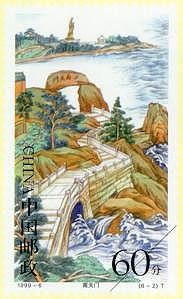
In 1999 China Post issued “Mount Putuo”, six stamps: Puji Temple, the South Heavenly Gate, Baibusha beach, Pantuo Rock, Fanyin Cave and Fayu Temple.