 National Parks of China
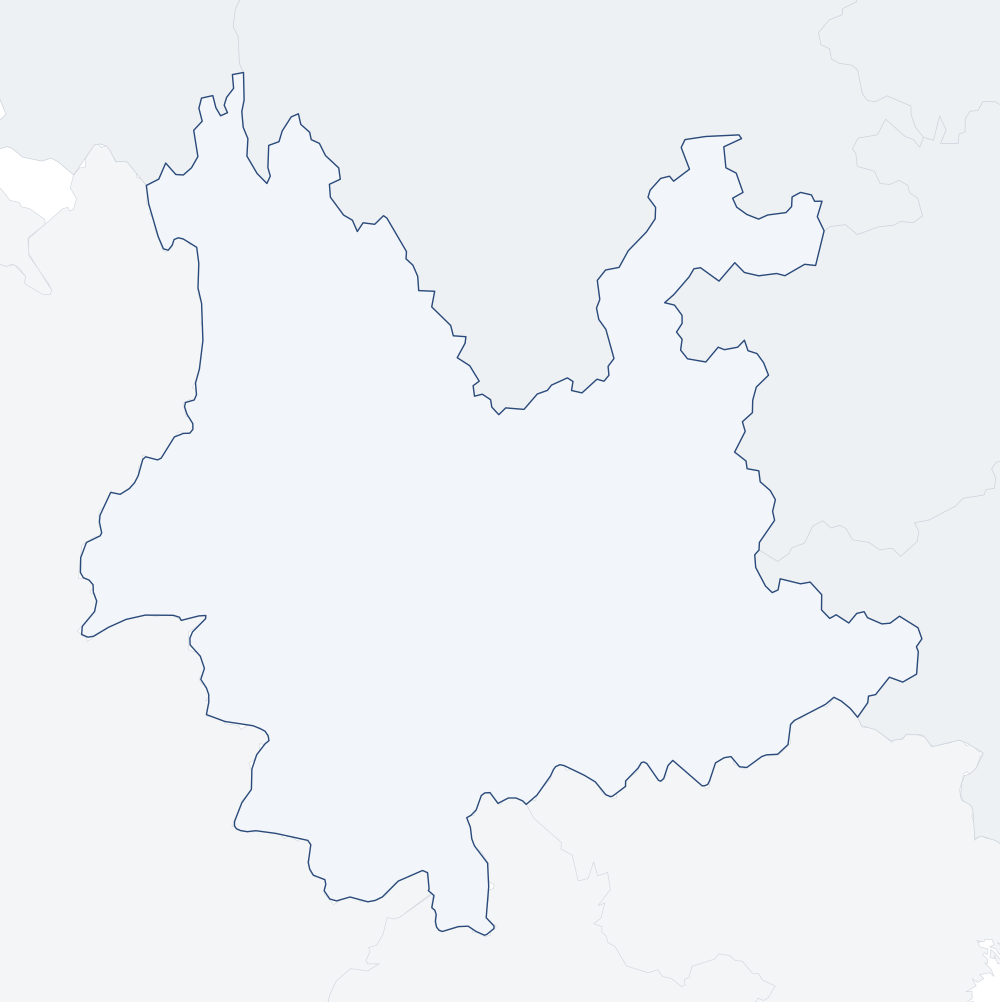
170 Major Historical and Cultural Sites Protected at the National Level in Yunnan (batches 1–8, named by the State Council 1961–2019; 1 of them cross provincial borders, such as the Great Wall and the Grand Canal). Dots are coloured by category; click one to jump to its entry. See also Yunnan and all provinces.
Batch:

Dali Bai Autonomous Prefecture (30)
- Shizhongshan Grottoes (including Shizhong Temple, Shiziguan and Shadengqing) 石钟山石窟(包括石钟寺、狮子关、沙登)Cave temples and stone carvings · first batch (1961)Caves cut from the middle and late Nanzhao period to the Dali Kingdom, distributed over Shizhong Temple, Shiziguan and Shadengqing, with 17 caves and 233 statues in total.
- Three Pagodas of Chongsheng Temple 崇圣寺三塔Ancient buildings · first batch (1961)Three brick pagodas within Chongsheng Temple northwest of Dali Old Town, built in the late Nanzhao period; the Qianxun Pagoda is a large dense-eave pagoda, and the two small pagodas to the north and south are pavilion-style.
- Taihe City Site (including the Nanzhao Dehua Stele) 太和城遗址(包括南诏德化碑)Ancient sites · first batch (1961)Capital site of the Nanzhao kingdom from the time of Piluoge to Yimouxun, including the Nanzhao Dehua Stele.
- Nanzhao Iron Pillar 南诏铁柱Cave temples and stone carvings · third batch (1988)Cast-iron round pillar of the Nanzhao period, 3.3 meters tall and weighing about 2,069 kilograms, with a Chinese inscription on the shaft.
- Xizhou Bai Ancient Building Complex 喜洲白族古建筑群Ancient buildings · fifth batch (2001)A group of Bai dwellings on the northwest shore of Erhai Lake, characterized by "three rooms and a screen wall, four courtyards with five patios", mostly of earth, wood, brick and stone.
- Stele of Emperor Shizu of Yuan Pacifying Yunnan 元世祖平云南碑Cave temples and stone carvings · fifth batch (2001)A stele set up in the 8th year of Dade of Emperor Chengzong of Yuan (1304), recounting how Kublai Khan conquered and pacified Dali.
- Baiyangcun Site 白羊村遗址Ancient sites · sixth batch (2006)A Neolithic site on the east bank of the Sangyuan River.
- Longyutushan City Site 𱛓图山城址Ancient sites · sixth batch (2006)One of the main city sites of Nanzhao, built by Xinuluo in the 23rd year of Zhenguan of the Tang (649), in Miaojie Town, Weishan County.
- Shuimu Temple Pagoda 水目寺塔Ancient buildings · sixth batch (2006)Begun in the Dali Kingdom and extensively repaired in the 33rd year of the Ming Wanli reign (1605), in Shuimu Temple on Shuimu Mountain.
- Futu Temple Pagoda 佛图寺塔Ancient buildings · sixth batch (2006)Commonly called the Snake Bone Pagoda, built in the time of Quan Fengyou of Nanzhao, a 13-story square close-eaved hollow brick pagoda.
- Zhoucheng Confucian and Military Temples 州城文庙和武庙Ancient buildings · sixth batch (2006)The Zhoucheng Confucian Temple is the Binchuan Prefectural School Confucian Temple, begun in the 7th year of the Ming Hongzhi reign (1494), and is protected together with the Military Temple.
- Ximen Street Ancient Building Complex 西门街古建筑群Ancient buildings · sixth batch (2006)An ancient building complex of nine courtyards combined as one item, including the Zhaozhong Shrine, the former residence of He Keji, the Zhang Mian courtyard and the Chen family compound.
- Shaxi Xingjiao Temple 沙溪兴教寺Ancient buildings · sixth batch (2006)A Buddhist temple building of the Ming to Republic periods.
- Changchun Cave 长春洞Ancient buildings · sixth batch (2006)Begun in the 54th year of the Qing Kangxi reign (1715), a Daoist temple whose plan forms a bagua diagram, with the buildings arranged by the bagua directions.
- Haimenkou Site 海门口遗址Ancient sites · seventh batch (2013)Ancient site in the Bai region, dating from the Neolithic to the Xia, Shang and Zhou periods.
- Yinsuodao Site 银梭岛遗址Ancient sites · seventh batch (2013)Neolithic to Shang shell midden site on Yinsuo Island in the southeast of Erhai Lake.
- Shundang Cremation Tombs 顺荡火葬墓群Ancient tombs · seventh batch (2013)Also called the Dacisi Cremation Tombs at Shundang Village, Yunlong, on the east side of Dacisi Temple; Ming dynasty.
- Hongsheng Temple Pagoda 弘圣寺塔Ancient buildings · seventh batch (2013)Also called the "One Pagoda Temple", built in the Dali Kingdom, a 16-story square dense-eaved brick pagoda 43.87 meters high.
- Dengjue Temple 等觉寺Ancient buildings · seventh batch (2013)Also called Baoguo Temple, begun in Nanzhao and rebuilt in the Ming; its main hall, also called the "Sun Palace", was founded in the 16th year of the Yongle reign of the Ming (1418).
- Nuodeng Bai Vernacular Architecture Complex 诺邓白族乡土建筑群Ancient buildings · seventh batch (2013)A complex of Bai vernacular architecture of the Ming to Qing periods.
- Bi River Ancient Bridges 沘江古桥梁群Ancient buildings · seventh batch (2013)A group of ancient bridges along the Bi River and its tributaries, comprising 37 ancient bridges, mostly built in the Ming, Qing and early Republic.
- Jingfeng Pavilion Historic Building Complex 景风阁古建筑群Ancient buildings · seventh batch (2013)A Qing dynasty historic building complex on the east side of Jinhua Mountain in Jianchuan County.
- Yunnanyi Historic Building Complex 云南驿古建筑群Ancient buildings · seventh batch (2013)Named for the Yunnan Post Station set up in the Yuan, Ming and Qing; the core area consists of the post station, a large horse inn, inns, shops and the Li Family Compound.
- Nanzhao Town Historic Building Complex 南诏镇古建筑群Ancient buildings · seventh batch (2013)Three building groups, Yuhuang Pavilion, Wenhua Academy and Xiao Gong Shrine, arranged from north to south in the northeast corner of the ancient town of Weishan.
- Dabona Site 大波那遗址Ancient sites · eighth batch (2019)A cemetery site of the Warring States period, named one of the Top Ten New Archaeological Discoveries in China in 2014.
- Deyuan Ancient City Site 德源古城遗址Ancient sites · eighth batch (2019)Originally Dengchuan City, the capital of the Dengtan Zhao, one of the Six Zhao; the best-preserved known city site of the Nanzhao period.
- Tianfengshan Ancient Building Complex 天峰山古建筑群Ancient buildings · eighth batch (2019)An important Zhengyi-school Taoist center in western Yunnan, first built in the Wanli era of the Ming, laid out along the mountain and showing Yi local architectural features.
- Midu Wutai Great Temple 弥渡五台大寺Ancient buildings · eighth batch (2019)First built in the Ming and enlarged and repaired in the Yongzheng, Daoguang and Guangxu eras of the Qing, covering 4,364.72 square meters; the Guanyin Pavilion, Mahavira Hall and Laojun Hall survive.
- Former Yunnan Provincial Commander's Office 云南提督府旧址Ancient buildings · eighth batch (2019)Also called the Marshal's Office of Du Wenxiu; after Du Wenxiu's insurgents took Dali Prefecture city in 1856 they set up the Marshal's Office here; now the Dali City Museum.
- Dali Catholic Church 大理天主教堂Modern historic sites · eighth batch (2019)Cathedral of the Catholic Diocese of Dali, on Xinmin Road in the old town of Dali.
Kunming (27)
- Golden Hall of Taihe Palace 太和宫金殿Ancient buildings · second batch (1982)Also called the Kunming Golden Hall, the largest and best-preserved pure-bronze hall in China and one of the four bronze halls of the country.
- Dharani Pillar of Dizang Temple 地藏寺经幢Cave temples and stone carvings · second batch (1982)Seven-tier octagonal stone dharani pillar of the Dali Kingdom, found in 1919 and excavated in 1923, now standing in the Kunming Museum.
- Site of the Yunnan Military Academy 云南陆军讲武堂旧址Modern historic sites · third batch (1988)Site of a military school set up in the late Qing to train a new-style army, known with the Tianjin and Fengtian academies as one of the three great military academies, west of Cuihu Lake.
- Tomb of Nie Er 聂耳墓Modern historic sites · third batch (1988)Burial place of the musician Nie Er, who drowned in Japan in 1935; his ashes were brought back for burial and moved to the present site in 1980, and the whole is shaped like a violin.
- Vajra Pagoda of Miaozhan Temple 妙湛寺金刚塔Ancient buildings · fourth batch (1996)Entire pagoda built of sandstone, also called the Miaozhan Temple Stone Pagoda, with a square base pierced by arched doorways on four sides, called the "through-the-heart pagoda" by locals.
- Shizhaishan Tombs 石寨山古墓群Ancient tombs · fifth batch (2001)A group of tombs from the Warring States to the Han, which yielded the Seal of the King of Dian and several cowrie containers, a major archaeological discovery of the 20th century.
- Qiongzhu Temple 筇竹寺Ancient buildings · fifth batch (2001)A Buddhist temple on Yu'an Mountain, called the first temple to bring Chan Buddhism to Yunnan, with the Heavenly Kings Hall, Daxiongbao Hall and Huayan Pavilion as its main buildings.
- Huiguang Temple Pagoda and Changle Temple Pagoda 惠光寺塔和常乐寺塔Ancient buildings · sixth batch (2006)Also called the East and West Temple Pagodas, two ancient Buddhist pagodas that originally stood in Changle Temple and Huiguang Temple respectively.
- Caoxi Temple 曹溪寺Ancient buildings · sixth batch (2006)A Buddhist temple covering 2,370 square meters, with a gate, Heavenly Kings Hall, main hall, rear hall and bell and drum towers.
- Anning Confucian Temple 安宁文庙Ancient buildings · sixth batch (2006)Also called the Lianran Confucian Temple, at its height having 22 buildings in 7 sequences and 6 courtyards, of which only the Dacheng Hall and Chongsheng Shrine survive.
- Zhenqing Temple Ancient Building Complex 真庆观古建筑群Ancient buildings · sixth batch (2006)Made up of Zhenqing Temple, Dulei Mansion and Yanlong Shrine, covering 20,700 square meters, the largest ancient building complex in the main urban area of Kunming.
- Wang Renqiu Stele 王仁求碑Cave temples and stone carvings · sixth batch (2006)A stele erected in the 1st year of Shengli of the Wu Zhou (698), the only Tang stele surviving in the Kunming area.
- Ma Hazhi Tombstone 马哈只墓碑Cave temples and stone carvings · sixth batch (2006)The tombstone of Ma Hazhi, father of the navigator Zheng He, in Zheng He Park.
- Shilongba Hydropower Station 石龙坝水电站Modern historic sites · sixth batch (2006)Completed in 1912, the first hydropower station in China, built using the natural drop of the Tanglang River at the outlet of Dianchi Lake.
- Site of National Southwest Associated University 国立西南联合大学旧址Modern historic sites · sixth batch (2006)The site of the Southwest Associated University during the War of Resistance, an important modern historic site.
- Victory in the War of Resistance Memorial Hall 抗战胜利纪念堂Modern historic sites · sixth batch (2006)Also called the People's Victory Hall, on the site of the Qing Governor-General's yamen of Yunnan and Guizhou, begun in 1945 and covering 28.12 mu.
- Daguan Tower 大观楼Ancient buildings · seventh batch (2013)A tower on the north shore of Dian Lake, around which Daguan Park was built; it was listed as a national key cultural heritage site in 2013.
- Fulintang Pharmacy 福林堂Modern historic sites · seventh batch (2013)Named for the meaning "blessings in the apricot grove", it was founded in the 7th year of Xianfeng of the Qing dynasty (1857) and is the oldest surviving pharmacy in Yunnan.
- Danggui Village Headquarters Site of the Central Red Army and Jiaoping Ferry on the Jinsha River 丹桂村中央红军总部驻地旧址与金沙江皎平渡口Modern historic sites · seventh batch (2013)In 1935 the Central Red Army passed through on the Long March, with its headquarters in Danggui Village, where a Military Commission meeting was held to plan the crossing of the Jinsha River; also includes Jiaoping Ferry.
- Hebosuo Site 河泊所遗址Ancient sites · eighth batch (2019)The core residential area of the ancient Dian culture, on the southeast shore of Dianchi Lake, with a total area of 12 square kilometers and a close relationship to the Shizhaishan tombs.
- Tomb of Sayyid Ajall Shams al-Din 赛典赤·赡思丁墓Ancient tombs · eighth batch (2019)Tomb of Sayyid Ajall Shams al-Din, Administrator of Yunnan in the Yuan dynasty; the tomb is rectangular and built of stone, and was rebuilt in 1985.
- Haikou Chuan-Shaped Sluice 海口川字闸Ancient buildings · eighth batch (2019)A multi-arch stone bridge-sluice at the outlet of Dianchi Lake, built in the 16th year of Daoguang of the Qing (1836) and named for its resemblance to the character "川."
- Wenquan Cliff Inscription Group 温泉摩崖石刻群Cave temples and stone carvings · eighth batch (2019)On the Huanyun cliff on the right bank of the Tanglang River, about 200 meters long, with over 160 inscriptions, mostly by Ming and Qing literati visiting the hot spring.
- Huize Hall of Yunnan University 云南大学会泽院Modern historic sites · eighth batch (2019)Also called Huize Building, built in 1923-1924 as one of the first teaching buildings of Donglu University; a symbolic building of Yunnan University.
- Kunming Lu Family Mansion 昆明卢氏公馆Modern historic sites · eighth batch (2019)Residence of Lu Han, former chairman of Yunnan Province, opposite the east gate of Cuihu Park.
- Modern Buildings of Phoenix Hill Observatory 凤凰山天文台近代建筑Modern historic sites · eighth batch (2019)The headquarters of the Yunnan Observatory, originally an astronomical observing station established after the westward relocation during the war, at an altitude of over 2,000 meters.
- Former Central Electrical Equipment Works No. 1 中央电工器材厂一厂旧址Modern historic sites · eighth batch (2019)Former site of a large factory founded by the National Government's Resources Commission in 1936 and moved to Kunming after the war began.
Chuxiong Yi Autonomous Prefecture (11)
- Yuanmou Man Site 元谋猿人遗址Ancient sites · second batch (1982)Place where Yuanmou Man fossils were found; two incisors were found in 1965, followed by stone tools and charcoal fragments, belonging to Chinese Homo erectus.
- Ramapithecus Fossil Locality 腊玛古猿化石地点Ancient sites · third batch (1988)Place where Lufeng ape fossils were found, on Miaoshanpo beside the old Chengdu-Kunming railway.
- Dayao White Pagoda 大姚白塔Ancient buildings · sixth batch (2006)A brick pagoda begun in Nanzhao with an octagonal base, a body and an ellipsoid top, shaped like a gong mallet and so also called the "Gong Mallet Pagoda"; it is 15.45 meters high.
- Longhua Temple 龙华寺Ancient buildings · sixth batch (2006)Originally called Wofo Temple, enlarged in the Yuan; the existing buildings were rebuilt in the 33rd year of the Qing Guangxu reign (1907), covering 4,372 square meters.
- Yuanmou Ape Fossil Locality 元谋古猿化石地点Ancient sites · seventh batch (2013)Paleolithic fossil locality of ancient apes.
- Dadunzi Site 大墩子遗址Ancient sites · seventh batch (2013)Neolithic site on the north bank of the Zhang'er Village River.
- Wanjiaba Ancient Tombs 万家坝古墓群Ancient tombs · seventh batch (2013)Tombs of the late Spring and Autumn to early Warring States period, around the 5th century BC; 80 tombs were found, and Tomb No. 23 yielded an early bronze drum, after which the Wanjiaba-type bronze drum is named.
- Defeng Temple 德丰寺Ancient buildings · seventh batch (2013)Ming dynasty Buddhist temple buildings.
- Chuxiong Confucian Temple 楚雄文庙Ancient buildings · seventh batch (2013)Founded in the Ming; in the Kangxi reign of the Qing the county and prefectural Confucian temples were combined, with Wanshi Shibiao Archway, the Pan Pond and Dacheng Hall along the central axis.
- Xingsu Bridge and Fengyu Bridge 星宿桥和丰裕桥Ancient buildings · seventh batch (2013)Qing dynasty stone bridges, Xingsu Bridge and Fengyu Bridge.
- Luliang Lianxiang Pass Bridge and Tunnel Group of the Yunnan-Burma Railway 滇缅铁路禄丰炼象关桥隧群Modern historic sites · eighth batch (2019)Remains of the Yunnan-Burma Railway, including a roadbed section, five bridges and four tunnels, about 6,300 meters long.
Baoshan (10)
- Guoshang Cemetery 国殇墓园Modern historic sites · fourth batch (1996)Cemetery commemorating soldiers of the Expeditionary Army's 20th Army Group killed in the 1944 Battle of Tengchong; the name "Guoshang" is taken from the Chu Ci.
- Hanzhuang City Site 汉庄城址Ancient sites · fifth batch (2001)Formerly called the Zhugeying ancient city site, it is a city left by Yongchang Commandery of the Eastern Han.
- Baoshan Jade Emperor Pavilion 保山玉皇阁Ancient buildings · sixth batch (2006)A Ming-dynasty Daoist building, the Jade Emperor Pavilion.
- Site of the Heshun Library 和顺图书馆旧址Modern historic sites · sixth batch (2006)A village library in Heshun Town, Tengchong, an important modern historic site of the Republic period.
- Site of the Battle of Songshan 松山战役旧址Modern historic sites · sixth batch (2006)Made up of the Songshan battlefield site and the site of Japanese crimes in Longling.
- Qiluo Wenchang Palace 绮罗文昌宫Ancient buildings · seventh batch (2013)A Qing dynasty Wenchang Palace building.
- Former Site of the Western Yunnan Military Government and Diyuan Inscriptions 滇西军都督府旧址及叠园集刻Modern historic sites · seventh batch (2013)Former site of the Western Yunnan Military Government of 1911, together with the Diyuan Collected Inscriptions.
- Dadianshan Site 大甸山遗址Ancient sites · eighth batch (2019)A site from the Spring and Autumn period to the Han dynasty with a total area of about 590,000 square meters; its culture differs from the Dian culture and it may have been a central settlement of the Ailao state.
- Baoshan Guangzun Temple 保山光尊寺Ancient buildings · eighth batch (2019)A Buddhist temple of the Qing to the Republic of China period.
- Huitong Bridge on the Yunnan-Burma Highway 滇缅公路惠通桥Modern historic sites · eighth batch (2019)A steel-cable suspension bridge over the Nu River completed in 1935, the vital crossing of the Nu River on the Yunnan-Burma Highway during the War of Resistance against Japan.
Qujing (9)
- Cuan Baozi Stele 爨宝子碑Cave temples and stone carvings · first batch (1961)Eastern Jin stele whose script is transitional between clerical and regular script and holds an important place in the history of calligraphy; with the Cuan Longyan Stele it is known as the "Two Cuan."
- Cuan Longyan Stele 爨龙颜碑Cave temples and stone carvings · first batch (1961)Southern Dynasties stele in regular script with traces of clerical style; called the "Greater Cuan" for its size, it holds an important place in the history of calligraphy.
- Stele of the Alliance between the Duan Clan and the Thirty-Seven Tribes 段氏与三十七部会盟碑Cave temples and stone carvings · first batch (1961)Stele erected after the Duan regime and thirty-seven tribes swore an alliance at Shicheng in the third year of the Mingzheng reign of the Dali Kingdom (971); also called the Shicheng Alliance Stele.
- Bataitai Tombs 八塔台墓群Ancient tombs · sixth batch (2006)A group of tombs from the Zhou to the Ming, belonging to the Dian Laojin and Mimo cultures.
- Huize Guildhalls 会泽会馆Ancient buildings · sixth batch (2006)Includes the "Eight Great Guildhalls" of Jiangxi, Huguang, Guizhou, Yunnan, Jiangnan, Fujian, Shaanxi and Sichuan.
- Dahe Site 大河遗址Ancient sites · seventh batch (2013)Ancient Paleolithic site.
- Luohanshan Ancient Tombs 罗汉山古墓群Ancient tombs · seventh batch (2013)Ancient tomb group of the Eastern Han to Tang dynasties.
- Kedu Pass Post Road 可渡关驿道Ancient buildings · seventh batch (2013)An ancient post road from the Qin to the Qing, around Kedu Pass in Xuanwei.
- Luliang Dajue Temple 陆良大觉寺Ancient buildings · seventh batch (2013)Buddhist temple buildings of the Yuan and Ming periods.
Lijiang (9)
- Dabaoji Palace and Liuli Hall 大宝积宫与琉璃殿Ancient buildings · fourth batch (1996)Ming-dynasty ancient buildings made up of Dabaoji Palace and Liuli Hall.
- Yingpancun Tombs 营盘村墓群Ancient tombs · sixth batch (2006)A clan cemetery built by the Taliu people, a branch of the Yi, in the Ming-Qing transition.
- Baoshan Stone City 宝山石头城Ancient buildings · sixth batch (2006)A Naxi village built on a giant columnar rock on the right bank of the Jinsha River in the Zhiyuan era of the early Yuan, once the seat of Baoshan Prefecture.
- Heilongtan Ancient Building Complex 黑龙潭古建筑群Ancient buildings · sixth batch (2006)The Lijiang Black Dragon Pool Park, whose spring water flows into the Yu River and the Old Town of Lijiang, the main source of the old town's water system.
- Jinlong Bridge 金龙桥Ancient buildings · sixth batch (2006)An iron-chain suspension bridge over the Jinsha River, begun in the 2nd year of the Qing Guangxu reign (1876) and repaired in the 25th year of the Republic (1936).
- Murals of Dajue Palace 大觉宫壁画Ancient buildings · seventh batch (2013)One of the surviving temples with Baisha murals; the Baisha murals were painted from the early Ming to the early Qing and combine Han Buddhist, Tibetan Buddhist and Daoist subjects.
- Lijiang Puji Temple 丽江普济寺Ancient buildings · seventh batch (2013)A Buddhist temple of the Qing to Republican periods.
- Guanyin Pavilion Stone Carvings 观音阁石刻造像Cave temples and stone carvings · seventh batch (2013)Also called Lingyuan Guanyin Temple, in Lingyuanqing in the eastern suburb of Yongsheng county town, with stone carvings of the Northern Song and Qing.
- Qina Ancient Building Complex 期纳古建筑群Ancient buildings · eighth batch (2019)A group of Ming and Qing buildings in Qina Town, Yongsheng County.
Yuxi (8)
- Lijiashan Tombs 李家山古墓群Ancient tombs · fifth batch (2001)A group of tombs from the Warring States to the Han, at the northwest corner of Xingyun Lake, among the Top Ten New Archaeological Discoveries of 1992.
- Xiushan Ancient Building Complex 秀山古建筑群Ancient buildings · sixth batch (2006)A temple was already built on the hill in the Dali Kingdom and was repeatedly expanded in the Yuan, Ming and Qing; the main buildings are Yongjin Temple, Qingliang Terrace, Jade Emperor Pavilion and Tonghai Confucian Temple.
- Yuxi Kiln Site 玉溪窑址Ancient sites · seventh batch (2013)Kiln site of the Yuan to Ming dynasties.
- Jinlianshan and Xueshan Site Cluster 金莲山、学山遗址群Ancient tombs · seventh batch (2013)Site cluster of the Spring and Autumn period to the Han dynasty, including Jinlianshan and Xueshan.
- Former Site of Wenxingxiang Trading House 文兴祥商号旧址Modern historic sites · seventh batch (2013)Former site of a trading house, 1934.
- Longxi Clan Manor 陇西世族庄园Modern historic sites · seventh batch (2013)A manor building of 1938.
- Gantangqing Site 甘棠箐遗址Ancient sites · eighth batch (2019)An open-air Paleolithic site of the Early Pleistocene, about 5 km south of Fuxian Lake, covering about 31,000 square meters.
- Jiangchuan Confucian Temple 江川文庙Ancient buildings · eighth batch (2019)First built in the Qianlong era of the Qing, at the south foot of Zhongxiu Mountain, covering 31 mu; the largest ancient building complex in Jiangchuan County.
Pu'er (7)
- Menglian Xuanfusi Office 孟连宣抚司署Ancient buildings · sixth batch (2006)A Dai chieftain's office complex combining Han and Dai architectural styles, with the council hall as its main building, a three-eave hip-and-gable stilted timber structure; the Menglian chieftain was appointed Pacification Commissioner in 1709 (Qing Kangxi 48).
- Ethnic Unity Oath Stele 民族团结誓词碑Modern historic sites · sixth batch (2006)A stele erected after the Wa traditional oath-swearing ceremony on January 1, 1951, to promote ethnic unity.
- Jinggu Dai Buddhist Temple Complex 景谷傣族佛寺建筑群Ancient buildings · seventh batch (2013)A complex of Dai Buddhist temples of the Ming to Qing periods.
- Jingdong Confucian Temple 景东文庙Ancient buildings · seventh batch (2013)Begun in the 7th year of the Zhengtong reign of the Ming (1442), with the temple on the right and the school on the left; the Dacheng Hall has five bays and a single-eaved hip-and-gable roof.
- Nuofu Church 糯福教堂Modern historic sites · seventh batch (2013)A church built by the American Baptist mission, an elevated-floor galleried building in Lahu style with a European and American church interior.
- Jingmai Ancient Tea Plantations 景迈古茶园Other · seventh batch (2013)A typical example of ancient cultivated tea forest, made up of 5 ancient tea forests, 9 ancient villages and 3 separating protective forests; inscribed as a World Heritage Site in 2023.
- Mojiang Confucian Temple 墨江文庙Ancient buildings · eighth batch (2019)The Confucian temple of Talang Subprefecture, Pu'er Prefecture, first built in the 1st year of Daoguang of the Qing (1821); the Dacheng Hall has five bays and a double-eaved hip-and-gable roof.
Lincang (6)
- Guangyunmian Temple 广允缅寺Ancient buildings · third batch (1988)Theravada Buddhist temple whose main hall, built in the Qing, combines double-eaved pavilions with cloister halls.
- Shifodong Site 石佛洞遗址Ancient sites · fourth batch (1996)Site from the Neolithic to the Bronze Age.
- Cangyuan Rock Paintings 沧源崖画Cave temples and stone carvings · fifth batch (2001)The collective name for 17 Neolithic rock painting sites in the county, discovered in 1965, on mountains at 1,200 to 2,000 m above sea level.
- Mengwang Pagoda and Northwest Pagoda 勐旺塔及西北塔Ancient buildings · seventh batch (2013)Ming dynasty Buddhist pagodas, including Mengwang Pagoda and the Northwest Pagoda.
- Liulang River Mill Group 流浪河磨房群Ancient buildings · eighth batch (2019)A group of Qing-dynasty mill buildings.
- Former Fengqing Tea Factory Old Plant 凤庆茶厂老厂区旧址Modern historic sites · eighth batch (2019)Former site of the old plant of a tea factory of 1950.
Zhaotong (5)
- Yuan Zi Inscription Cliff Carving 袁滋题记摩崖石刻Cave temples and stone carvings · third batch (1988)Cliff inscription carved in the tenth year of the Zhenyuan reign of the Tang (794), 122 characters in intaglio regular script, recording Yuan Zi's mission to enfeoff Yimouxun as King of Nanzhao.
- Meng Xiaoju Stele 孟孝琚碑Cave temples and stone carvings · sixth batch (2006)A Han stele unearthed at Baniqing in Zhaotong in the 27th year of the Qing Guangxu reign (1901), praised as "the foremost ancient Han stele," set in the Han Stele Pavilion.
- Washi Hanging Coffins 瓦石悬棺Ancient tombs · seventh batch (2013)Remains of hanging coffin burials of the Tang dynasty.
- Long Family Ancestral Hall 龙氏家祠Modern historic sites · seventh batch (2013)An ancestral hall building of 1930.
- Zhuti Old City Site 朱提故城遗址Ancient sites · eighth batch (2019)Also called the Zhugeying City Site; the seat of Zhuti County and Zhuti Commandery in the Han and Jin periods.
Xishuangbanna Dai Autonomous Prefecture (4)
- Jingzhen Octagonal Pavilion 景真八角亭Ancient buildings · third batch (1988)Ordination hall of a Theravada Buddhist temple; the other buildings of Jingzhen Temple have been rebuilt.
- Manfeilong Pagoda 曼飞龙塔Ancient buildings · third batch (1988)Called "Ta Nuo Zhuang Long" in the Dai language, a Theravada pagoda group similar to a Vajra Throne pagoda; the present pagodas may have been rebuilt in the Qianlong years of the Qing.
- Manduan Buddhist Temple 曼短佛寺Ancient buildings · sixth batch (2006)A Theravada Buddhist temple whose Buddha hall was built in the late Ming to early Qing, the earliest surviving timber building in Xishuangbanna.
- Manchunman Buddhist Temple 曼春满佛寺Ancient buildings · seventh batch (2013)A Qing dynasty Dai Buddhist temple.
Diqing Tibetan Autonomous Prefecture (4)
- Shouguo Temple 寿国寺Ancient buildings · sixth batch (2006)A Kagyu-school Tibetan Buddhist temple built in the Qing dynasty on the east bank of the Lancang River, with murals combining Buddhist, Daoist and Confucian content.
- Cizhong Church 茨中教堂Modern historic sites · sixth batch (2006)Also called the Cizhong Sacred Heart Church, a church in Cizhong Village in the south of Deqin County.
- Yezhi Tusi Yamen 叶枝土司衙署Ancient buildings · eighth batch (2019)Official residence of the local Naxi hereditary chieftain family Wang, in Yezhi Town.
- Tongle Lisu Dwelling Complex 同乐傈僳族民居建筑群Ancient buildings · eighth batch (2019)A Lisu village on the east bank of the Lancang River at an altitude of 2,210 meters, founded over 200 years ago.
Dêqên Tibetan Autonomous Prefecture (1)
- Zhongxin Town Public Hall 中心镇公堂Ancient buildings · fourth batch (1996)Place for Tibetan rituals, assemblies, weddings and funerals, first built in the second year of the Yongzheng reign of the Qing and rebuilt in the eighth year of the Guangxu reign (1882).
Nujiang Lisu Autonomous Prefecture (1)
- Yushuiping Site 玉水坪遗址Ancient sites · seventh batch (2013)Site with Neolithic culture in the upper layer and Paleolithic culture in the lower layer.
Across several cities (37)
- Nalou Chieftain's Office 纳楼长官司署Modern historic sites · fourth batch (1996)One of the yamen of the deputy chieftain of the Yi Nalou native office, built in the 33rd year of the Guangxu reign (1907), halfway up the hillside on the north bank of the Red River.
- Nandian Pacification Commissioner's Office 南甸宣抚司署Modern historic sites · fourth batch (1996)First built in the first year of the Xianfeng reign of the Qing (1851), enlarged by three generations of chieftains and taking its present scale in 1935.
- Jianshui Confucian Temple 建水文庙Ancient buildings · fifth batch (2001)First built in the 22nd year of Zhiyuan of the Yuan (1285), with six courtyards on 76,000 square meters, the most complete and largest Confucian temple in southwest China.
- Zhilin Temple Hall 指林寺大殿Ancient buildings · sixth batch (2006)Begun in the Yuanzhen era of the Yuan; it originally had a gate, main hall, rear hall, two pagodas and an archway, but only the main hall and archway survive.
- Chaoyang Tower 朝阳楼Ancient buildings · sixth batch (2006)Originally called Yinghui Gate, built in the 22nd year of the Ming Hongwu reign (1389) as the east gate tower of Jianshui city, and called the "Little Tiananmen."
- Shuanglong Bridge 双龙桥Ancient buildings · sixth batch (2006)Commonly called the Seventeen-Arch Bridge, spanning the confluence of the Lujiang and Tachong rivers, the largest and most artistically valuable ancient stone bridge in Yunnan.
- Wujiazhai Railway Bridge 五家寨铁路桥Modern historic sites · sixth batch (2006)Also called the Herringbone Bridge, a landmark work on the Kunming-Hekou Railway (the Yunnan section of the Yunnan-Vietnam Railway), in the Sichahe Gorge.
- Site of the Mengzi Customs House 蒙自海关旧址Modern historic sites · sixth batch (2006)Begun in 1887, comprising five buildings: the Customs Commissioner's office, the French consulate, the French prison, the French garden and the Gelushi trading house.
- Jijie Railway Station 鸡街火车站Modern historic sites · sixth batch (2006)A railway station opened in 1918, once a transfer station between meter-gauge and narrow-gauge lines, closed in 2012.
- Qihe Tower 企鹤楼Modern historic sites · sixth batch (2006)A modern building of the Republic period.
- Chen Family Ancestral Hall 陈氏宗祠Modern historic sites · sixth batch (2006)An ancestral hall building of the Republic period.
- Yunyan Pagoda 允燕塔Modern historic sites · sixth batch (2006)Also called the Mengting Pagoda, a Dai Buddhist pagoda on Yunyan Mountain.
- Nong Clan Chieftain Yamen 侬氏土司衙署Ancient buildings · seventh batch (2013)The yamen of the Nong clan chieftains; the existing buildings were rebuilt in the late Qing and early Republic, with a main gate, second gate, third gate and main hall.
- Laihe Pavilion 来鹤亭Ancient buildings · seventh batch (2013)A Qing dynasty pavilion building.
- Zheng Family Ancestral Hall 郑氏宗祠Ancient buildings · seventh batch (2013)A Qing-dynasty ancestral hall in Shiping County.
- Zhu Family Garden in Jianshui 建水朱家花园Ancient buildings · seventh batch (2013)A Qing-dynasty private garden residence in Jianshui County.
- Tuanshan Dwelling Complex 团山民居建筑群Ancient buildings · seventh batch (2013)A traditional village on the south bank of the Lujiang River, listed among the first batch of Chinese Traditional Villages, with dwellings of the Qing to Republican periods.
- Shiping Confucian Temple Complex 石屏文庙建筑群Ancient buildings · seventh batch (2013)A Confucian temple complex of the Qing to Republican periods.
- Honghe East Gate Tower and Yisa Dwellings 红河县东门楼及迤萨民居Ancient buildings · seventh batch (2013)The East Gate Tower and dwellings around Yisa, of the Qing to Republican periods.
- Jinsha River Rock Paintings 金沙江岩画Cave temples and stone carvings · seventh batch (2013)Prehistoric painted rock art along the Jinsha River and its tributaries, with more than 70 sites found; the Wanren Cave site at Tiger Leaping Gorge is dated to about 13,600-8,700 years ago.
- Dawang Rock Rock Art 大王岩岩画Cave temples and stone carvings · seventh batch (2013)Rock art from the Neolithic to the Zhou.
- Former Residence of Xiong Qinglai 熊庆来故居Modern historic sites · seventh batch (2013)Former residence of the mathematician Xiong Qinglai, a southern Yunnan courtyard house built in the Guangxu era of the Qing dynasty; one of the four famous modern residences in Yunnan.
- Bisezhai Railway Station 碧色寨车站Modern historic sites · seventh batch (2013)Built in 1909, the only special-class station on the Yunnan-Vietnam Railway and the starting point of the Gebishi Railway.
- Baofenglong Trading House 宝丰隆商号Modern historic sites · seventh batch (2013)A trading house building of 1916.
- Zhou Family Compound 周家宅院Modern historic sites · seventh batch (2013)Courtyard residence of the family of Zhou Ziyin, a wealthy Mengzi gentleman; first built in 1916, with four rows and four courtyards in a mixed Chinese and Western style, covering 2,809 square meters.
- Honghe Hani Rice Terraces 红河哈尼梯田Other · seventh batch (2013)Terraces farmed by the Hani people for generations, with a history of about 1,300 years; spread across Yuanyang, Honghe, Jinping and Lüchun counties, covering about one million mu.
- Muyi Site 牡宜遗址Ancient sites · eighth batch (2019)A site of the Gouding culture from the Bronze Age to the Wei and Jin periods, discovered in 2007 after a landslide and then cleared in rescue excavations.
- Three Buddhas Hall of Wanshou Temple in Luxi 泸西万寿寺三佛殿Ancient buildings · eighth batch (2019)A Ming-dynasty Buddhist hall, the Three Buddhas Hall of Wanshou Temple in Luxi.
- Jianshui Tuzhu Temple 建水土主庙Ancient buildings · eighth batch (2019)A temple building of the Ming and Qing periods.
- Mengzi Yuhuang Pavilion 蒙自玉皇阁Ancient buildings · eighth batch (2019)A Taoist building, the Yuhuang Pavilion, of the Ming and Qing periods.
- Jianshui Yuhuang Pavilion and Chongwen Pagoda 建水玉皇阁及崇文塔Ancient buildings · eighth batch (2019)The Yuhuang Pavilion and Chongwen Pagoda of the Ming and Qing periods.
- Xin'ansuo Ancient Building Complex 新安所古建筑群Ancient buildings · eighth batch (2019)A group of ancient buildings of the Ming and Qing periods.
- Huilan Bridge Pavilion 洄澜桥阁Ancient buildings · eighth batch (2019)A Qing-dynasty bridge-pavilion building.
- Jianshui Educational Commissioner's Examination Shed 建水学政考棚Ancient buildings · eighth batch (2019)A Qing-dynasty examination shed building, in Jianshui County.
- Wanding Bridge 畹町桥Modern historic sites · eighth batch (2019)Also called the Wanjiu Bridge; spanning the Wanding River to Myanmar, a bridge on the China-Myanmar border river through which the Chinese Expeditionary Force entered Burma during the war.
- Former Kaiyuan Power Plant 开远发电厂旧址Modern historic sites · eighth batch (2019)One of the 156 key projects built with Soviet aid and the first semi-automated coal-fired condensing thermal power plant in Yunnan, begun in 1955.
- Kaiyuan Changhong Bridge 开远长虹桥Modern historic sites · eighth batch (2019)A stone arch bridge completed in 1961 over the Nanpan River, on the old National Highway 326, a first-class protected bridge at the national level.
Across provinces (1)
- Tea Horse Road 茶马古道Ancient sites · seventh batch (2013)An ancient commercial road network in the southwest from the Tang to the Republican period, found across Sichuan, Yunnan, Guizhou and Tibet, linking the economies and cultures of the interior and various ethnic groups.