National Parks of China
Overview
| Province | Tibet |
| Location | Tibet |
| Latitude, longitude | 29.6, 91.1 Google Maps |
| Nearby sites | The Potala Palace, Lhasa, Yarlung River, Namtso and the Nyainqêntanglha Mountains |
| Highlights | Holy city of the plateau |
| Top sights | Potala Palace |
| Elevation | 3,658 m |
| Nearby cities | Tashilhunpo Monastery, Gyantse |
| Themes | Plateaus, Cities, Museums, Snow mountains, Temples, Buddhism, Rivers, Stamps, Banknotes & coins |
About
Lhasa, capital of the Tibet Autonomous Region, lies in the valley of the Lhasa River, a tributary of the Yarlung Tsangpo, at 3,658 m: the holy city of Tibetan Buddhism and one of the first historic cities named by the State Council. The Potala Palace stands in the city centre.
North of the Himalaya and under sinking air, Lhasa is sunny most of the year with little rain, no bitter winter and no hot summer: a semi-arid plateau monsoon climate, maximum 29 °C, minimum −16.5 °C, mean 7.4 °C, about 500 mm of rain concentrated in July–September, and over 3,000 hours of sun a year, the “City of Sunlight”.
City sights
Potala Palace: the landmark of Lhasa, World Heritage
Jokhang Temple: the holiest temple of Tibetan Buddhism, World Heritage
Norbulingka: summer palace of the Dalai Lamas, World Heritage
Ramoche Temple
Drepung Monastery
Sera Monastery: monks’ debates, weekday afternoons
Barkhor: the street round the Jokhang
Tibet Museum
Suburban sights
Yamdrok Lake: south-west of the city, one of the sacred lakes of Tibet.
Yarlung Tsangpo river
Further afield
Yarlung River: second-batch National Park of China
Namtso: the highest salt lake; one of the sacred lakes of Tibet.
Yangbajain: geothermal field
Festivals
Shoton: the yoghurt festival, also the Tibetan opera festival or Buddha-unveiling festival, with grand opera performances and the unveiling of giant thangkas, now the largest popular festival and trade fair of the region.
Transport
Air: Lhasa Gonggar airport has flights to major Chinese cities and to Kathmandu.
Road: the Qinghai–Tibet, Sichuan–Tibet, Yunnan–Tibet and Xinjiang–Tibet highways radiate from Lhasa, and the China–Nepal highway runs to Nepal.
Rail: the 1,080 km Qinghai–Tibet railway was completed in October 2005 and opened on 1 July 2006.
Taxi: usually 10 yuan a ride in the city
News
On 14 March 2008 rioting, looting and arson broke out in Lhasa; 18 innocent people were reported killed.
Specialities
Cordyceps: a prized medicinal fungus
Stamps and banknotes
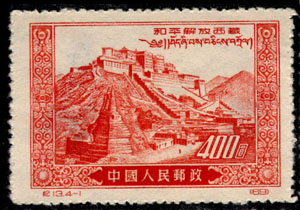
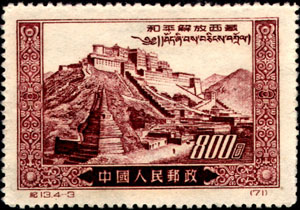
On 15 March 1952 China Post issued C13 “Peaceful Liberation of Tibet”, four stamps; the 400-yuan and 800-yuan values show a panorama of the Potala.
On 1 July 2006 the set 2006-15 “Opening of the Qinghai–Tibet Railway”, three stamps: crossing Hoh Xil, over the Tanggula and Lhasa station.
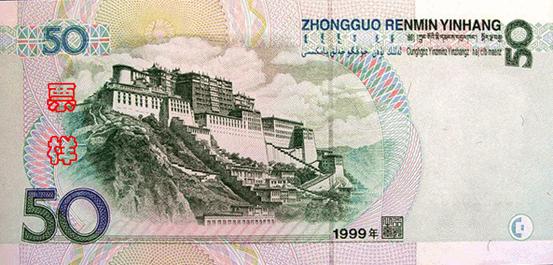
The back of the 50-yuan note of the fifth series of renminbi shows the Potala.