 National Parks of China
Overview
| Designation | UNESCO World Heritage (cultural, 1987) |
| Province | Liaoning |
| Location | Centre of Shenyang |
| Latitude, longitude | 41.8, 123.4 Google Maps |
| Nearby cities | Shenyang |
| Highlights | Qing imperial palace |
| Area | over 60,000 m² |
| Nearby sites | Qianshan, Benxi Water Cave, Mount Yiwulü, Phoenix Mountain, Qingshangou |
| Themes | Palaces, Historic buildings, Cities, Museums, Stamps |
The Mukden Palace
The Mukden Palace in Shenhe District, Shenyang, historically the Shengjing Palace, was begun in 1625 as the early palace of the Manchu Qing regime. After the court moved to Beijing in 1644 it was enlarged as a travelling palace for emperors touring the north-east; since 1926 it has been the Shenyang Palace Museum, with more than 100 old buildings on over 60,000 m².
The museum was founded in 1955; the palace became a national protected site in 1961, the museum was renamed in 1986, and in 2004 it was added to the World Heritage listing of the Imperial Palaces as an extension of the Forbidden City in Beijing.
The core is the palace of Hong Taiji (reigned 1627–43), strongly Manchu and north-eastern in style. The gate faces a street with a small square across it and archways at either end. Inside are three axes. On the central axis the court lies in front and the living quarters behind: the Chongzheng Hall for audiences, and behind it a courtyard on a high terrace entered through a gate like a city gate with the three-storey Phoenix Tower, the tallest building. The east axis is a long courtyard with the Dazheng Hall, an octagonal double-eaved pavilion, at its north end and ten square pavilions, the Ten Princes’ Pavilions, fanning out before it. The west axis has a theatre and the Wensu Pavilion library.
Here the Qing empire, rising from Liaodong, laid its foundations and grew from a regional power into a dynasty that ruled all China for 268 years.
Main sights
Daqing Gate: the main gate of the central section, facing the street to the south; inside lies the front court of the central axis.
Chongzheng Hall: the main hall of the front court, where Hong Taiji handled state business and received envoys; it has a hip-and-gable roof and stone balustrades in front.
Phoenix Tower: a three-storey tower on a raised platform and the tallest building in the palace; the gateway on the ground floor leads into the rear residential court.
Qingning Palace: the principal residence of the rear court, home of the empress and also used for Manchu shamanic rites; a ritual pole stands in the courtyard.
Dazheng Hall: an octagonal double-eaved hall at the north end of the eastern section, built under Nurhaci and used for major ceremonies.
Ten Kings' Pavilions: ten pavilions ranged on both sides in front of Dazheng Hall, linked to the Eight Banners system and used by princes and banner officials for meetings and administration.
Wensu Pavilion: the library of the western section, built under the Qianlong Emperor to house a copy of the Siku Quanshu, modelled on the Tianyi Pavilion in Ningbo; the books are no longer kept in Shenyang.
Jiayin Hall: the theatre of the western section, built in the Qianlong period, where the emperor watched performances during his tours to the northeast.
History and culture
In 1625 Nurhaci moved his capital to Shenyang and began building the palace; the Dazheng Hall and the Ten Kings' Pavilions in the eastern section date from this time.
His successor Hong Taiji enlarged the central section and in 1636 proclaimed the Qing dynasty at Shengjing, as the city was then called. Chongzheng Hall, Phoenix Tower and Qingning Palace date from this period, when the palace was the political centre of the early Qing state.
After the court moved to Beijing in 1644, the Shenyang palace was kept as a secondary palace. The Qianlong Emperor made several tours to Shengjing and added the western section, including the library and theatre.
The layout differs from Han-style palaces: the pavilions tied to the Eight Banners, the shamanic ritual features of Qingning Palace and the Manchu-style heated platforms all reflect early Manchu institutions and customs.
Travel tips
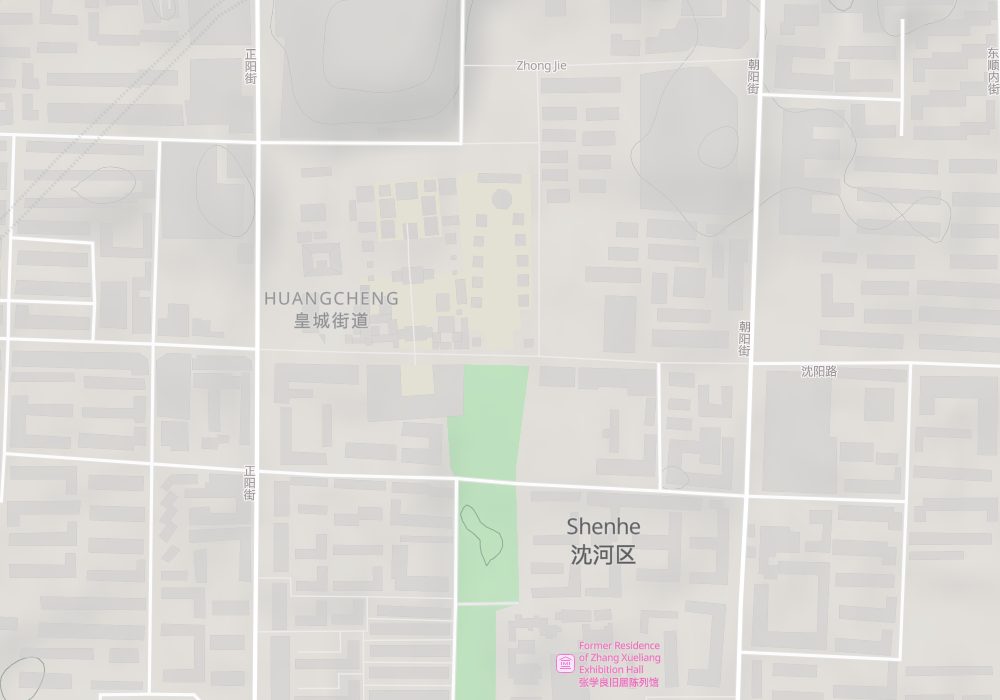
Getting there: the palace is in the city centre in Shenhe District, a short walk from nearby metro stations, next to the Zhongjie shopping street.
Booking: visits must be booked in advance under your real name; holiday slots are limited.
Visiting: most people enter on the central axis to see the Daqing Gate, Chongzheng Hall, Phoenix Tower and Qingning Palace; the eastern section has the Dazheng Hall and the Ten Kings' Pavilions; the western section has the theatre stage and the Wensu Library.
Time: two to three hours for the main buildings.
Nearby: the Zhang Family Mansion is a short way south; Fuling (East Tomb) and Zhaoling (North Tomb), early Qing imperial tombs that are also World Heritage, lie in the northeast and north of the city.
Season: late spring to autumn is best; winter is very cold, but there are few visitors.
Caution: the weekly closing day changes with the season.
Stamps
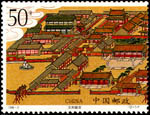
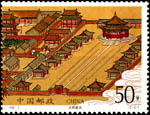
On 18 March 1996 China Post issued 1996-3T “Mukden Palace”, two stamps: the western buildings and the eastern buildings.
Map
© OpenStreetMap contributors · terrain © Copernicus · Map credits