 National Parks of China
Overview
| Designation | National Park of China (first batch) |
| Province | Liaoning |
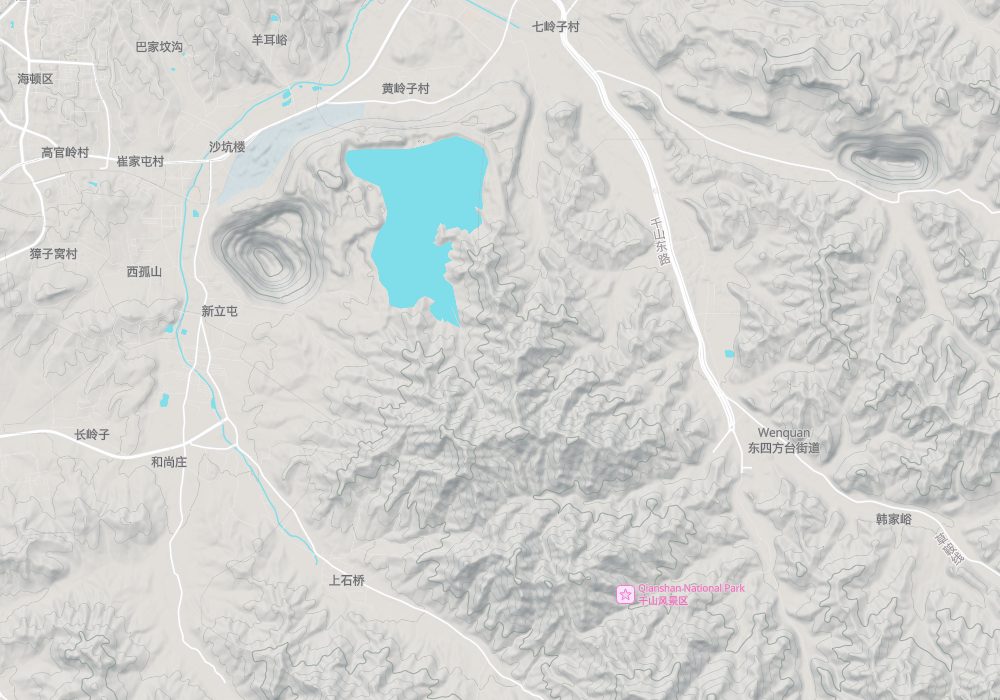
| Location | 17 km south of Anshan, Liaoning, a spur of the Changbai Mountains |
| Latitude, longitude | 41.0, 123.1 Google Maps |
| Highlights | Strange peaks, rock pines, old temples, pear blossom |
| Top sights | Immortals’ Terrace, Five Buddha Summit, the Jade Buddha |
| Area | 44 km² |
| Highest point | 708 m |
| Nearby cities | Shenyang, Dalian, Beijing, Tianjin, Harbin |
| Nearby sites | Mukden Palace, Shenyang, Phoenix Mountain, Mount Yiwulü, Benxi Water Cave, Yalu River, Qingshangou, Xingcheng Seaside |
| Themes | Famous mountains, Mountains, Hills, Buddhism, Temples, Statues |
About
Qianshan (“Thousand Mountains”), also called Jicui, Qianhua, Qianding or Thousand Lotus Mountain, lies 17 km south-east of Anshan, Liaoning, a famous Buddhist mountain.
The Immortals’ Terrace, also Guanyin Peak, is the summit at 708 m; the Five Buddha Summit is the second highest. The Jade Buddha Garden houses a Buddha carved from a single block of jade 8 m high, 6.8 m wide and 4 m thick, weighing 260 tonnes. The mountain has five great monasteries: Da’an, Longquan, Zuyue, Zhonghui and Xiangyan.
Qianshan, a spur of the Changbai range, is named for its “nearly a thousand peaks”, and for its lotus-like shape is also called the Mountain of a Thousand Lotuses. The granite massif has four wonders: peaks, rocks, pines and temples, with jagged summits, strange boulders, twisted old pines and monasteries facing each other across the valleys. Buddhism and Taoism have flourished here since the Liao and Jin, with “nine palaces, eight Taoist temples, twelve hermitages and five great monasteries”: the first Buddhist and Taoist mountain of the north-east.
It is in the first batch of national parks of China (national scenic areas) named by the State Council in 1982.
Travel tips
Getting there: from Anshan city, a bus or taxi to the main gate of Qianshan takes about half an hour. Anshan has a high-speed rail station, so a day trip from Shenyang or Dalian is possible.
Northern area: the busiest part, with Wuliang Temple, Longquan Temple, Zuyue Temple and Five Buddha Peak; a loop on foot takes most of a day. A cable car goes up toward Five Buddha Peak.
Xianrentai area: Immortals' Terrace (Xianrentai) is the main peak, with Da'an Temple and Xiangyan Temple nearby; the walks are longer and the path up Xianrentai is steep.
Great Buddha area: the Great Buddha Temple and the natural Maitreya Buddha; it is separate from the northern area and needs a bus or car.
Jade Buddha Park: in Anshan city, easy to visit on the way to or from the mountain.
Time: one day for the northern area; two days to add Xianrentai and the Great Buddha area.
Season: pear blossom in April and May and red leaves in October are the best times; winter is cold and the paths may be icy.
Caution: there are many steps, and some sections squeeze through rock clefts or climb steep rock.
Main sights
Northern area: the most visited, with the Wuliang Taoist Temple, Longquan Temple, Zuyue Temple, Five Buddha Summit, the One-Step Ascent, the Pinch Rock and Heaven above Heaven. Wuliang, founded in the early Qing, is the largest Taoist monastery in the north-east; Five Buddha Summit, 554 m, has five stone Buddhas on top.
Central area: Da’an, Zhonghui and Xiangyan temples and the Immortals’ Terrace, the main peak, topped by rock pillars like immortals at chess.
West Sea area: the Great Buddha Temple and the natural Maitreya, a 70 m seated Buddha formed by the outline of a peak, discovered in 1993, after which the temple was built.
Jade Buddha Garden: on Dongshan in the city of Anshan, with a Buddha carved from Xiuyan jade, the urban part of the park.
Tanggangzi hot springs: a spa north-west of the mountain famous for mud baths.
Map
© OpenStreetMap contributors · terrain © Copernicus · Map credits