 Park of China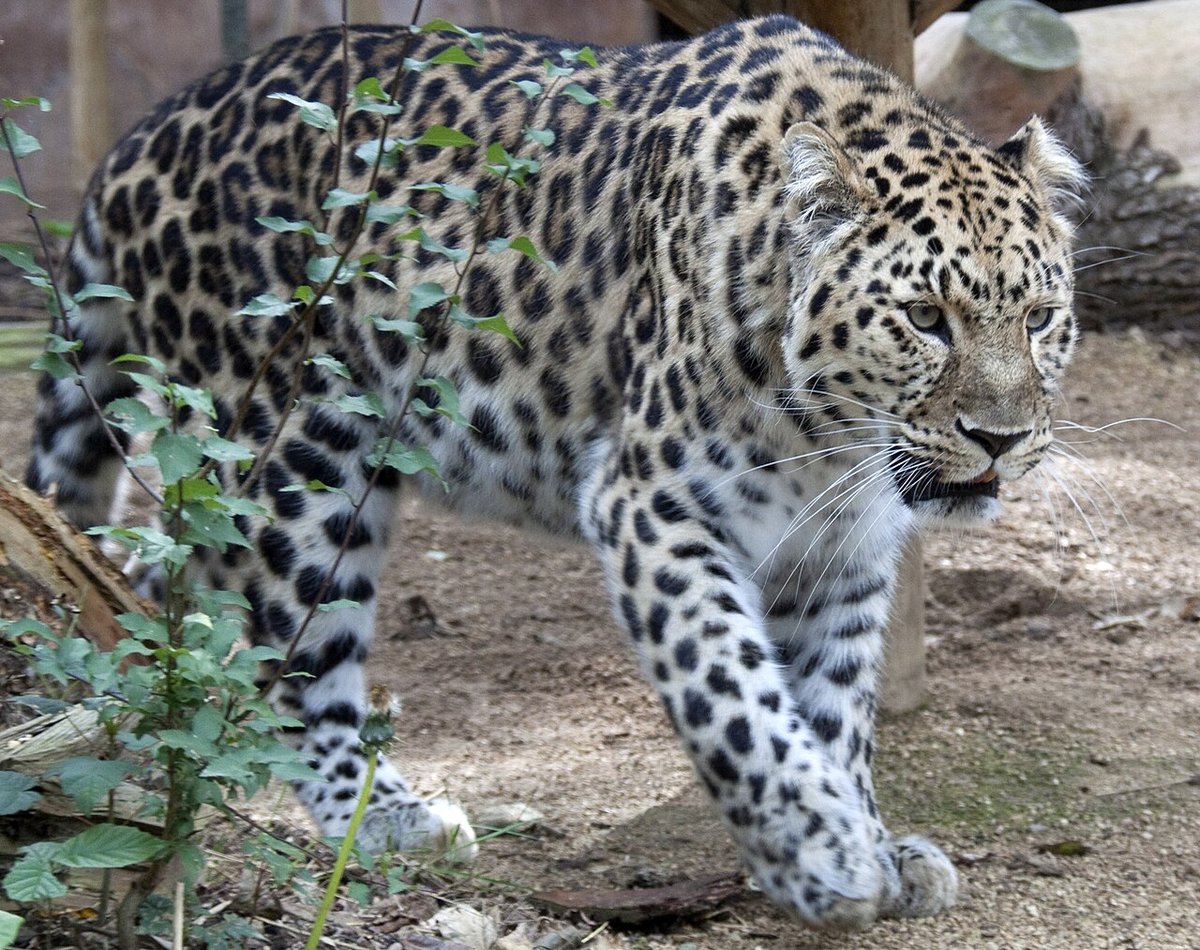
Overview
| Designation | National Park (new system) (established 2021) |
| Name | Northeast China Tiger and Leopard National Park |
| Location | Eastern Jilin and south-eastern Heilongjiang, on the borders with Russia and North Korea |
| Area | 14,100 km² |
| Managed by | National Forestry and Grassland Administration (National Park Administration) |
| Nearby cities | Harbin, Changchun, Jilin City |
| Nearby sites | Fangchuan 101km, Jingpo Lake 157km, Heaven Lake of Changbai Mountain 270km, Songhua Lake 319km Search nearby |
| Latitude, longitude | 43.45, 130.75 Google Maps |
Introduction
Northeast China Tiger and Leopard National Park lies in the southern Laoye Mountains in the east of Jilin and Heilongjiang. Covered mostly by temperate mixed forest of conifers and broadleaf trees, it was set up chiefly to protect the wild Amur (Siberian) tiger and Amur leopard.
A national park pilot began in 2017 and the park was formally set up in 2021, when it held about 50 wild tigers and 60 leopards.
According to the National Forestry and Grassland Administration (2026), the numbers have risen to 72 tigers and 115 leopards.
The map dot marks one place in the park, not its extent.
Park areas
The Jilin portion covers 9,557 km² (about 68%) and the Heilongjiang portion 4,508 km² (about 32%) (Master Plan 2023–2030).
It spans Hunchun, Wangqing and Tumen in Jilin Province and Dongning, Muling and Ning'an in Heilongjiang Province.
It is run through five branch bureaus: Yanbian, 3,391 km² (Wangqing County); Hunchun, 3,327 km² (Hunchun City); Wangqing, 2,839 km² (Hunchun, Wangqing, Tumen); Suiyang, 2,781 km² (Dongning City); Mudanjiang, 1,727 km² (Ning'an, Muling).
To the east it borders Russia's Primorsky Krai. The park works with Russia's Land of the Leopard National Park, and together they protect nearly 17,000 km².
The core protection zone covers 7,586 km² (about 53.9%). The general control zone covers 6,479 km² and contains the villages, forest farm settlements, nature education and recreation.
Nature and wildlife
The park lies in the southern Laoye Mountains, an offshoot of the Changbai Mountains. It is mostly low mountains, valleys and hills under 1,000 m. The highest peak, Laoyeling, reaches 1,477.4 m.
It has a temperate continental monsoon climate. The mean annual temperature is about 5°C, and the record low is −44.1°C. Annual precipitation is 450–750 mm, 80% of it falling from May to September.
Eight rivers rise in the park, including the Hunchun, Suifen, Muling and Gaya. They drain into four river systems: the Tumen, Suifen, Ussuri and Mudan.
Most of the forest is mixed conifer and broadleaf: Korean pine, Mongolian oak, Manchurian ash and others. Japanese yew, the park's only Class I protected plant, grows in southern Muling and the Duhuangzi area of Wangqing.
The master plan records 397 wild vertebrate species and 884 higher plant species. There are 15 Class I protected animals, including the Amur tiger, Amur leopard, sika deer, Siberian musk deer and sable, and 43 Class II species, including the Asiatic black bear, lynx and red deer.
Tigers and leopards mainly hunt sika deer, red deer, roe deer and wild boar. In 2026 the National Forestry and Grassland Administration reported that 21 tigers and 27 leopards regularly move between China and Russia.
Places to visit
Hunchun Amur Tiger and Leopard Nature Science Museum: in Hunchun city. It shows specimens and temperate forest dioramas, and a digital sand table displays wildlife footage from the park's camera traps.
Mopanshan Gateway Community, Wangqing: one of the park's gateway communities, with a monitoring and education center.
Travel tips
The nearest airports are Yanji Chaoyangchuan International Airport (Jilin side) and Mudanjiang Hailang International Airport (Heilongjiang side).
The Changchun–Hunchun high-speed railway runs to Hunchun Station from Changchun, Jilin and Yanji. For the Dongning side, travel via Mudanjiang.
Summer and autumn are the best seasons, especially when the leaves turn in autumn. Winters are long and very cold, so bring cold-weather gear for the mountains.
Wild tigers and leopards live here. Do not enter the forest alone or leave open areas and trails, and follow local warnings. Human activity is generally banned in the core protection zone.
The park lies next to the China–Russia border. Carry ID and follow border-area rules.
More photos

Map


Photo credits: Amur leopard: Tony Hisgett (CC BY 2.0, Wikimedia Commons); Amur (Siberian) tiger: Appaloosa (CC BY-SA 3.0, Wikimedia Commons)
Nearby
| National parks | Fangchuan 101km, Jingpo Lake 157km, Xianjingtai 186km |
| Nature reserves | Wangqing National Nature Reserve 68km, Xilinhe National Nature Reserve 116km, Baishan Yuanshe National Nature Reserve 118km, Mudanfeng National Nature Reserve 138km |