 National Parks of China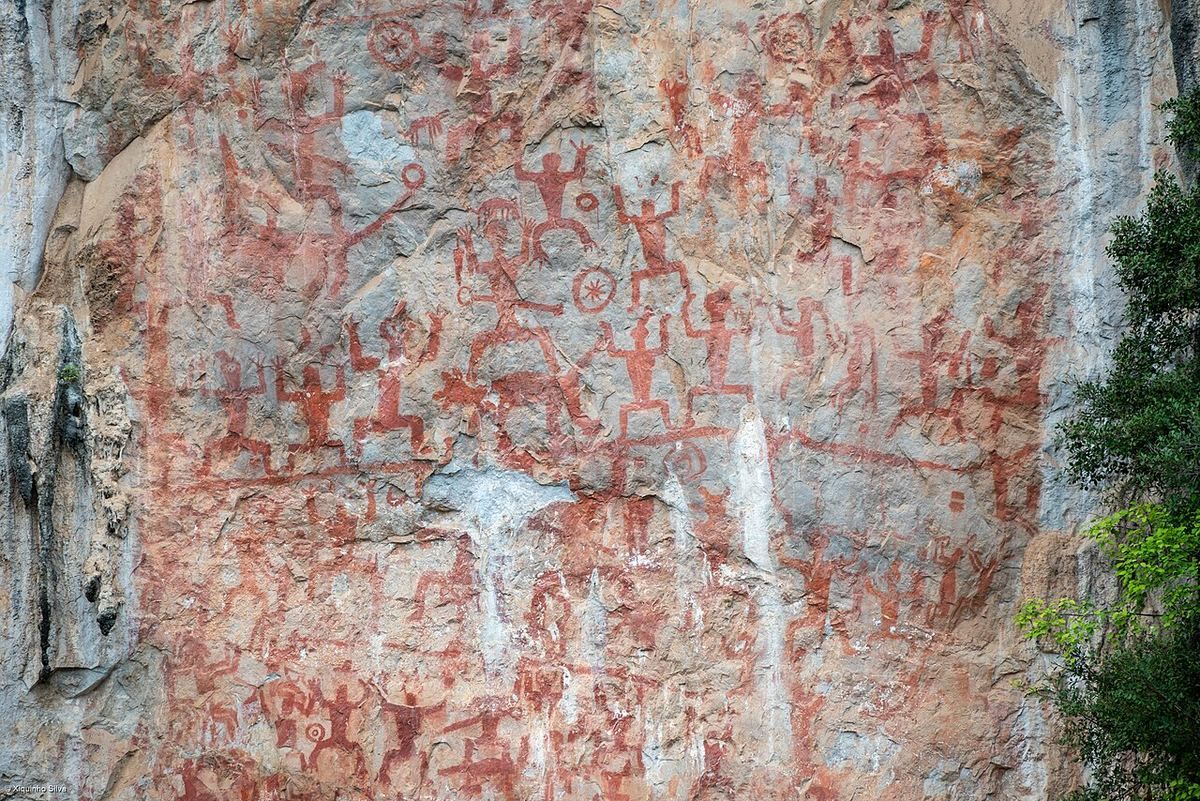
Overview
| Designation | UNESCO World Heritage (cultural, 2016) |
| Name | 左江花山岩画文化景观 |
| Country | China |
| Nearby cities | Nanning |
| Nearby sites | West Mountain of Guiping 331km, Libo and the Zhangjiang River 341km, Huguangyan 358km, Puzhehei 367km, Maling River 378km Search nearby |
| Latitude, longitude | 22.26, 107.03 Google Maps |
| Themes | Culture, Cliff, Karst, River, Rock art & murals |
About
Zuojiang Huashan Rock Art Cultural Landscape (左江花山岩画文化景观) was inscribed on the UNESCO World Heritage List in 2016 as a cultural site.
Travel tips
Getting there: the property is in Chongzuo, Guangxi, centred on Huashan beside the Ming River in Ningming county. From Nanning a high-speed train to Chongzuo takes about an hour, then a bus or taxi to Ningming county and the Huashan scenic area.
The rock art: the Ningming Huashan cliff is about 40 m high and 170 m wide, with paintings 30 to 90 m above the river, showing with groups of human figures in uniform poses, along with bronze drums, swords and dogs. It is best seen from a boat on the Ming River.
How to see it: the scenic area has a pier, and boats go upstream to the foot of the cliff. From a distance the reddish-ochre patches are visible to the naked eye; binoculars help.
Other sites: there are 38 rock-art locations in all, along the Zuo River and its tributaries in Ningming, Longzhou, Jiangzhou, Fusui and nearby. Most are on steep cliffs, and not all are open or can be seen at close range.
Time: Huashan alone takes half a day to a day from Chongzuo; with the Zuo River scenery and Detian Waterfall, allow two or three days.
Season: autumn, winter and early spring have steadier water and better weather. Summer is hot and rainy, and high water can disturb boat trips.
Where to stay: Chongzuo city or Ningming county is the most convenient.
Combining: Detian transnational waterfall, Mingshi pastoral scenery, the Friendship Pass and the Chongzuo white-headed langur reserve are all nearby.
Why it was inscribed
The World Heritage Committee found that it meets criteria (iii), (vi) of the ten selection criteria:
(iii) a unique or at least exceptional testimony to a cultural tradition or to a civilization which is living or which has disappeared.
(vi) directly or tangibly associated with events or living traditions, with ideas or beliefs, or with artistic and literary works of outstanding universal significance.
Description (UNESCO World Heritage Centre)
Located on the steep cliffs in the border regions of southwest China, these 38 sites of rock art illustrate the life and rituals of the Luoyue people. They date from the period around the 5th century BCE to the 2nd century CE. In a surrounding landscape of karst, rivers and plateaux, they depict ceremonies that have been interpreted as portraying the bronze drum culture once prevalent across southern China. This cultural landscape is the only remains of this culture today.
Photo credits: Zuojiang Huashan Rock Art, Ningming, Guangxi: xiquinhosilva (CC BY 2.0, Wikimedia Commons)
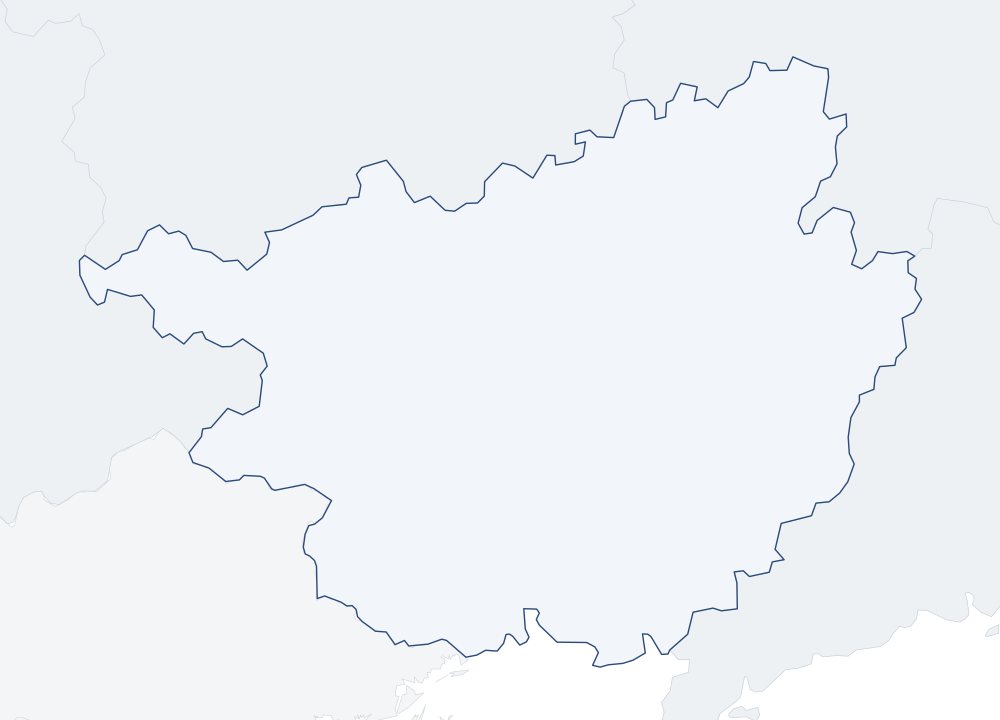
- Huashan, Ningming
- Longhzou County rock art
- Jiangzhou District rock art
Nearby
| World Heritage | Yen Tu-Vinh Nghiem-Con Son, Kiep Bac Complex of Monuments and Landscapes 169km, Ha Long Bay - Cat Ba Archipelago 175km, Central Sector of the Imperial Citadel of Thang Long - Hanoi 209km, Trang An Landscape Complex 276km |
| AAAAA attractions | Detian Transnational Waterfall Scenic Area 73km, Qingxiu Mountain Tourist Area 125km, Baise Uprising Memorial Park Scenic Area 178km |
| AAAA attractions | Taiping Ancient City 12km, Zuojiang Leaning Tower 14km, Dongna and Yuwan 40km, Xiaolian City Scenic Area 43km |
| Cities | Nanning 118km |
| Historical sites | Zuojiang Guilong Leaning Pagoda 14km |