 National Parks of China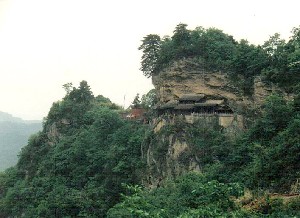
Overview
| Designation | UNESCO World Heritage (cultural, 1994) National Park of China (first batch) |
| Province | Hubei |
| Location | Shiyan, Hubei |
| Mountains | Mountain Ranges of China |
| Latitude, longitude | 32.4, 111.0 Google Maps |
| Highlights | Taoist holy mountain; ancient buildings |
| Top sights | The Golden Hall, the Southern Cliff, the Purple Cloud Palace |
| Highest point | 1,612.1 m |
| Nearby cities | Wuhan, Chongqing, Xi’an |
| Nearby sites | Shennongjia, The Three Gorges of the Yangtze, Danjiangkou Reservoir, Longzhong, Mount Shiren (Stone Men) |
| Themes | Famous Mountain, Mountain, Taoism, Temple, Ancient Building, Stamp |
About
Mount Wudang, a holy mountain of Taoism, lies in the municipality of Shiyan, Hubei, south-west of the Danjiangkou Reservoir. Its main peak, Tianzhu (Heavenly Pillar), is 1,612 m. The Taoist god of the north, Xuanwu (Zhenwu), is said to have attained immortality here.
Taoist buildings have been raised on the mountain since the Tang dynasty, reaching their peak under the Ming Yongle Emperor. It holds the most complete, largest and highest-ranking group of ancient Taoist buildings in China, and the statues, ritual objects and scriptures kept in them are of great historic and artistic value. The ancient buildings were inscribed as a World Heritage Site in 1994.
The Golden Hall on the summit of Tianzhu Peak was built in 1416. It is 5.54 m high, 4.4 m wide and 3.15 m deep, entirely of gilded bronze imitating timber construction; the bronze statue of Zhenwu inside weighs five tonnes.
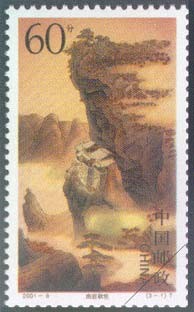
The Southern Cliff (Nanyan) is the most famous of the mountain’s 36 cliffs, with the Nanyan Palace, the Taichang Temple, the Thunder God Cave and the Crow Temple.
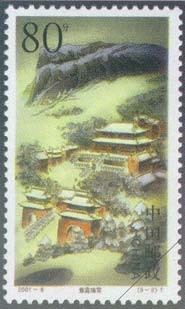
The Purple Cloud Palace (Zixiao Gong), north-east of Tianzhu Peak, was built in 1413 and is one of the best preserved temples on the mountain, with the Dragon and Tiger Hall, the Shifang Hall, the Purple Cloud Hall, the Parents’ Hall, the East and West palaces and the Crown Prince Cliff.
It is in the first batch of national parks of China (national scenic areas) named by the State Council in 1982.
Travel tips
Getting there: the Wuhan–Shiyan high-speed line stops at Wudangshan, and Shiyan has an airport. From the visitor centre in the Wudangshan special district town, take the park shuttle buses up the mountain; getting around inside the scenic area is by shuttle.
At the foot: Yuxu Palace is in the town itself; Xuanyue Gate is also below the mountain and can be visited before or after going up.
Golden Summit: the shuttle goes to Qiongtai, where a cable car climbs to the Golden Summit and the Golden Hall. You can also walk up the old pilgrim path from Wuyaling or Nanyan; it is many steps and takes two to three hours or more one way.
Nanyan and Zixiao Palace: Nanyan Palace is built against a cliff, with the carved Dragon Head Incense stone; Zixiao Palace is the most complete large temple on the mountain. Shuttles stop nearby.
Prince's Slope and Xiaoyao Valley: on the way up, as stops on the shuttle route.
Time: two days is comfortable for the main sights; one day covers only the Golden Summit, Nanyan and Zixiao Palace.
Season: spring and autumn are best. Summer is hot at the foot; in winter the top can be icy and the cable car or paths sometimes close. Public holidays are very crowded with long queues.
Where to stay: most people stay in the town at the foot; there are also places at Wuyaling and Nanyan on the mountain, handy for an early start to the summit.
Suggested itinerary
Day 1: the Xuanyue Gate, Yuxu Palace, Yuxu Cliff and Yuzhen Palace at the foot of the mountain, then by bus to Qiongtai; after lunch take the cable car to the Golden Summit for the Golden Hall and the sights of Tianzhu Peak; stay at Wuyaling.
Day 2: the Southern Cliff and the Purple Cloud Palace in the morning; walk down past Tianjin Bridge, Taizipo and the Needle-Grinding Well in the afternoon.
Stamps
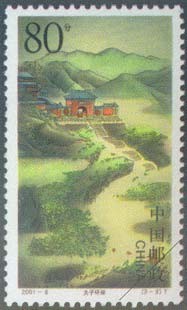
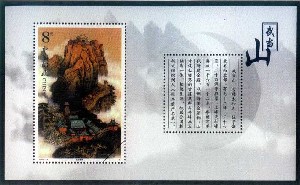
In 2001 China Post issued “Mount Wudang”, three stamps: autumn at the Southern Cliff, snow at the Purple Cloud Palace and greenery at Taizipo, with a souvenir sheet of spring dawn on the Golden Summit.
Other
On the night of 19 January 2003 the main hall of the Yuzhen Palace burned down; the fire was found to be due to negligence.
Map
© OpenStreetMap contributors · terrain © Copernicus · Map credits