 National Parks of China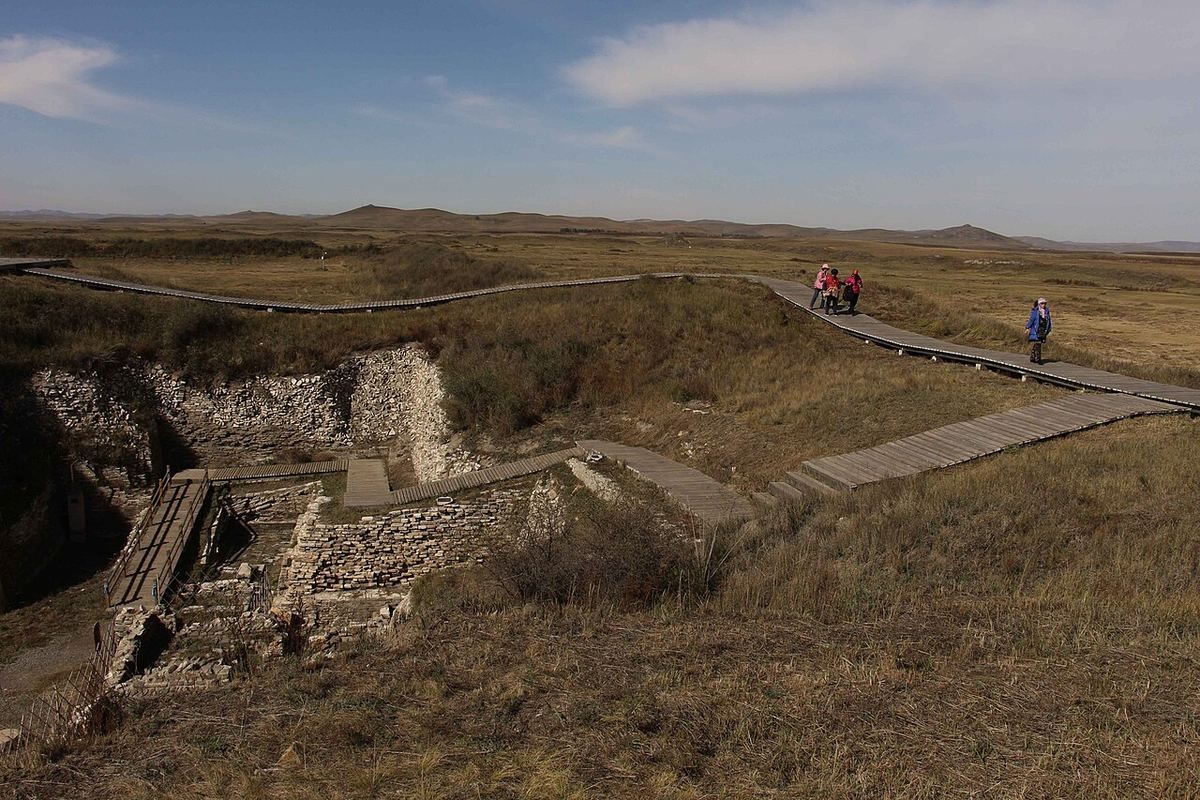
Overview
| Designation | UNESCO World Heritage (cultural, 2012) |
| Name | 元上都遗址 |
| Country | China |
| Nearby cities | Beijing, Tianjin, Shenyang, Dalian |
| Nearby sites | Chengde Mountain Resort and its Outlying Temples 211km, The Summer Palace, Beijing 263km, The Forbidden City (Palace Museum), Beijing 272km, The Temple of Heaven, Beijing 276km Search nearby |
| Latitude, longitude | 42.36, 116.19 Google Maps |
| Themes | Ancient City, Culture, Grassland, Archaeological sites |
About
Site of Xanadu (元上都遗址) was inscribed on the UNESCO World Heritage List in 2012 as a cultural site.
Travel tips
Location: in Shangdu town, Zhenglan Banner, Xilingol League, Inner Mongolia, on the grassland by the Luan River, in the direction of Chengde and Beijing.
Getting there: by car from Beijing it takes most of a day, via the Chengde or Zhangjiakou direction to Duolun and then on to the site; or take a long-distance bus to Duolun and hire a car. Duolun county town is the nearest larger settlement.
The site: the city has three enclosures, the outer city, inner (imperial) city and palace city, with the palace and inner city laid out symmetrically. Rammed-earth platforms remain of main buildings such as the Da'an Pavilion.
Time: half a day is enough; many travellers fit it into a grassland trip between Duolun, Hexigten and Chengde.
Season: June to September is best on the grassland; winter is severe and snow can close roads.
Where to stay: Duolun town and Zhenglan Banner have hotels, and yurt camps operate on the grassland in summer.
Caution: the site is large, and vehicles can be used inside. Wear sun protection; day-night temperature differences are large, so bring a jacket even in summer.
Why it was inscribed
The World Heritage Committee found that it meets criteria (ii), (iii), (iv), (vi) of the ten selection criteria:
(ii) an important interchange of human values, over a span of time or within a cultural area, on developments in architecture or technology, monumental arts, town-planning or landscape design.
(iii) a unique or at least exceptional testimony to a cultural tradition or to a civilization which is living or which has disappeared.
(iv) an outstanding example of a type of building, architectural or technological ensemble or landscape which illustrates significant stages in human history.
(vi) directly or tangibly associated with events or living traditions, with ideas or beliefs, or with artistic and literary works of outstanding universal significance.
Description (UNESCO World Heritage Centre)
North of the Great Wall, the Site of Xanadu encompasses the remains of Kublai Khan’s legendary capital city, designed by the Mongol ruler’s Chinese advisor Liu Bingzhdong in 1256. Over a surface area of 25,000 ha, the site was a unique attempt to assimilate the nomadic Mongolian and Han Chinese cultures. From this base, Kublai Khan established the Yuan dynasty that ruled China over a century, extending its boundaries across Asia. The religious debate that took place here resulted in the dissemination of Tibetan Buddhism over north-east Asia, a cultural and religious tradition still practised i
Photo credits: Ruins of Shangdu (Xanadu): Flaumfeder (CC BY-SA 4.0, Wikimedia Commons)
Nearby
| World Heritage | Chengde Mountain Resort and its Outlying Temples 211km, Ming Tombs 229km, The Summer Palace, Beijing 263km |
| National parks | Badaling–Ming Tombs Scenic Area 226km |
| AAAA attractions | Duolun Lake 47km |
| Historical sites | Zhenzishan Ancient Tombs 6km, Silangcheng Ancient City 19km, Huizong Temple 29km |