 National Parks of China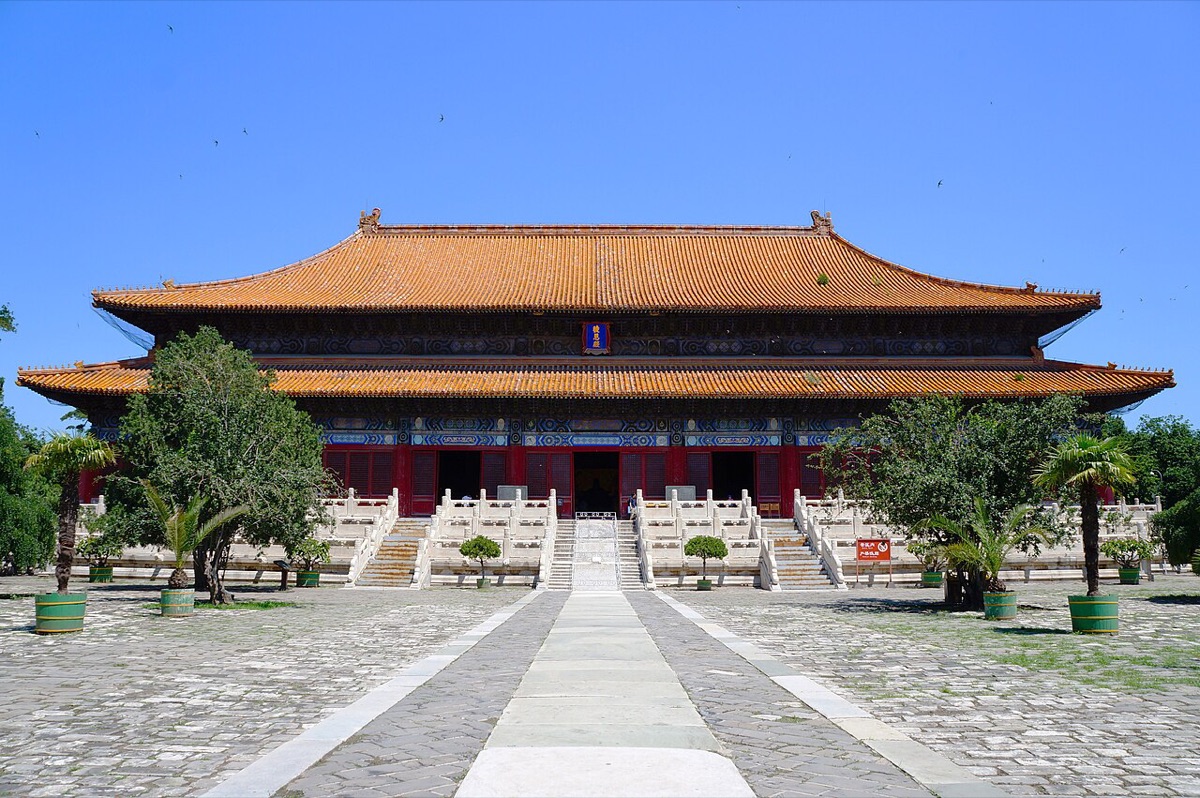
Overview
| Designation | UNESCO World Heritage (cultural, 2003, part of “Imperial Tombs of the Ming and Qing Dynasties”) National key cultural relic (first batch, 1961) Part of the first-batch National Park of China Badaling–Ming Tombs |
| Province | Beijing |
| Location | Northern Changping District, Beijing, at the southern foot of Tianshou Mountain |
| Latitude, longitude | 40.29, 116.23 Google Maps |
| Highlights | Tombs of the Ming emperors; the Sacred Way with its stone figures |
| Top sights | Changling, Dingling, Zhaoling, the Sacred Way |
| Nearby cities | Beijing |
| Nearby sites | The Summer Palace, Beijing 34 km, The Forbidden City (Palace Museum), Beijing 44 km, The Temple of Heaven, Beijing 49 km, Chengde Mountain Resort and its Outlying Temples 163 km Search nearby |
| Themes | Ancient Building, Tomb, Culture, Imperial palaces & gardens |
About
The Ming Tombs lie in northern Changping District, Beijing, at the southern foot of Tianshou Mountain. They are the mausoleums of thirteen Ming emperors; the main sights are Changling, Dingling and the Sacred Way (Shendao). Changling is the tomb of the Yongle Emperor Zhu Di; its palace buildings cover about 120,000 m². Dingling, the tomb of the Wanli Emperor, covers 180,000 m² and is the only one whose underground palace has been excavated.
The Ming Tombs Reservoir is nearby.
The tombs became a national key cultural relic in 1961 and were inscribed on the UNESCO World Heritage List in 2003 as part of “Imperial Tombs of the Ming and Qing Dynasties”. With Badaling they form the first-batch national scenic area “Badaling–Ming Tombs” (1982).
Main sights
Sacred Way: the entrance avenue to the Ming Tombs, starting at a stone archway and passing the Great Red Gate and a stele pavilion, with stone figures lining both sides.
Changling: the joint tomb of the Yongle Emperor and his empress; its Hall of Eminent Favour is one of the largest surviving timber halls, supported by huge nanmu columns.
Dingling: the tomb of the Wanli Emperor and two empresses; the underground palace was excavated in the 1950s and can now be entered.
History and culture
The Ming Tombs lie below Tianshou Mountain. Construction of Changling began in 1409 under the Yongle Emperor, and thirteen Ming emperors were eventually buried in the valley, down to the Chongzhen Emperor's Siling. The valley, backed by hills and open to the plain, was chosen according to geomancy.
Dingling is the only tomb in the Ming Tombs to have been excavated, between 1956 and 1958; the finds included silks, gold and silver ware and crowns.
After the Chongzhen Emperor took his own life he was buried in a tomb originally made for a consort. It became known as Siling and is one of the smaller tombs in the valley.
Travel tips
Getting there: the Ming Tombs are in Changping, reached by bus or taxi; people combining them with Badaling in one day usually hire a car or join a day tour.
Ming Tombs: the main sites open year-round are Changling, Dingling and Zhaoling, plus the Sacred Way; several other tombs have opened in recent years, mostly by booking. Changling has the intact Hall of Eminent Favour (Ling'en Hall); at Dingling you can go down into the underground palace; the Sacred Way is lined with stone figures.
Time: half a day for two or three of the tombs; combining them with Badaling in one day is tight.
Season: spring and autumn are best, and the October leaf season is busy. Summer is hot; winter is cold and windy but quiet.
Photo credits: The Ming Tombs: Jiaqian AirplaneFan (CC BY 3.0, Wikimedia Commons)
Nearby
| World Heritage | Badaling Great Wall 19 km, The Summer Palace, Beijing 34 km, The Forbidden City (Palace Museum), Beijing 44 km, Beijing Central Axis: A Building Ensemble Exhibiting the Ideal Order of the Chinese Capital 45 km |
| National parks | Stone Flower Cave 60 km, Mount Pan 91 km, Yesanpo 117 km |
| Detailed guides | Shidu 94 km |
| AAAAA attractions | Mutianyu Great Wall Tourist Area 20 km, Old Summer Palace (Yuanmingyuan) 32 km, Olympic Park 35 km, Prince Gong's Mansion Scenic Area 42 km |
| AAAA attractions | Yinshan Pagoda Forest 9 km, Juyongguan Great Wall 14 km, China Aviation Museum 16 km, Longmai Hot Spring Resort 19 km |
| Cities | Beijing 46 km, Tianjin 147 km |
| Historical sites | Jingzhang Railway: Nankou to Badaling Section 11 km, Cloud Terrace at Juyongguan 14 km, Tomb of Prince Chun 27 km, Xinhai Luanzhou Uprising Memorial Park 28 km |